Our Location
Killa-Pardi, Dist. Valsad, 396125

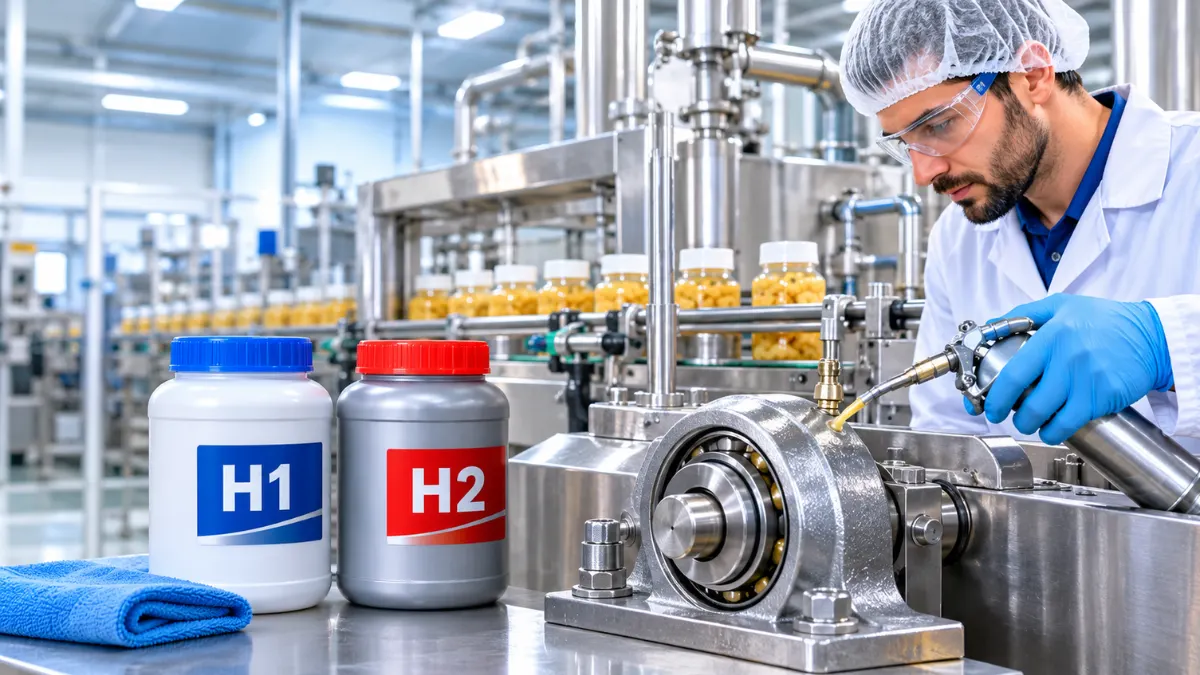
Food and beverage manufacturing plants depend on bearings, conveyor chains, gearboxes, hydraulic systems, compressors, pumps and packaging machines. All these components require proper lubrication to reduce friction, prevent wear, control heat and improve equipment reliability.
However, lubrication in a food-processing facility involves an additional responsibility: preventing lubricant contamination of food products.
This is where NSF H1 and NSF H2 lubricants become important.
Both classifications are used in food-processing environments, but they are designed for different levels of food-contact risk. Selecting the wrong lubricant can create food-safety problems, maintenance issues and unnecessary operating costs.
For example, a conveyor bearing installed above an open food-production line may require an NSF H1 lubricant because accidental contact is possible. A gearbox installed in a physically isolated machine room, with no possibility of contact with food, may be suitable for an H2 lubricant, subject to the facility’s food-safety assessment.
The most important difference is simple: NSF H1 allows incidental food contact under specified conditions, whereas NSF H2 is intended for applications where food contact is not possible.
This technical guide explains NSF H1 vs H2 food grade lubricants, their formulation requirements, viscosity, temperature performance, industrial applications, advantages, limitations and product-selection criteria.
| Parameter | NSF H1 lubricant | NSF H2 lubricant |
|---|---|---|
| Main purpose | Lubrication where incidental food contact may occur | Industrial lubrication where food contact cannot occur |
| Food contact | Incidental contact permitted under applicable requirements | Not permitted |
| Formulation | Restricted ingredients and applicable food-contact requirements | More flexibility in formulation |
| FDA regulation | 21 CFR 178.3570 is relevant | H1 incidental-contact requirements do not apply |
| Typical application | Food conveyors, bearings, packaging machines | Isolated gearboxes, enclosed machinery |
| Food-grade designation | Yes, for incidental-contact applications | No, not food-contact safe |
| Lubrication performance | Depends on product formulation | Depends on product formulation |
| Temperature range | Product-specific | Product-specific |
| NSF verification | NSF H1 listing | NSF H2 listing |
Important: H1 and H2 are food-processing lubricant classifications. They are not viscosity grades, NLGI grades or performance ratings.
A higher classification number does not mean higher lubrication performance. NSF maintains a registration system and an online directory known as the NSF White Book, where users can verify registered products.
NSF H1 is a lubricant classification intended for machinery and equipment in food-processing environments where incidental contact between lubricant and food may occur.
These lubricants are formulated using ingredients that meet applicable food-contact requirements, including the requirements of FDA 21 CFR 178.3570 where applicable.
The purpose is to reduce the potential food-safety risk if a small amount of lubricant accidentally reaches food during normal equipment operation.
Examples include:
An H1 lubricant must not be treated as an edible substance. It is designed for incidental contact, not intentional mixing with food. The formulation must comply with the applicable ingredient requirements and restrictions. The amount of lubricant used must be the minimum required to achieve the intended technical function.
According to NSF, the applicable FDA requirements include restrictions on permitted ingredients and specified concentration limits. For certain lubricant base oils, the 10 ppm limit is particularly relevant.
NSF H2 lubricants are designed for machinery and equipment in food-processing facilities where there is no possibility of lubricant contact with food.
They are industrial lubricants rather than incidental-food-contact lubricants. Because accidental food contact is not part of their intended application, H2 formulations have greater flexibility than H1 formulations. Typical applications include:
For example, consider a food manufacturing plant with two different gearboxes.
The first gearbox drives a conveyor carrying uncovered biscuits. If lubricant leakage could reach the biscuits, H1 is the appropriate category to investigate. The second gearbox is located inside an isolated machine room, with no possible contact with food. H2 may be appropriate if the plant’s hazard analysis confirms that separation.
Never use H2 lubricant in an application where incidental food contact is possible.
NSF registration provides independent verification that a product has been reviewed against the requirements of its designated category.
For H1, this involves evaluating the formulation and its suitability for incidental food-contact applications. The NSF White Book is an important verification resource. Before purchasing any lubricant, check:
An important regulatory distinction is that the FDA does not individually approve every H1 lubricant as an edible or food ingredient. The relevant ingredient regulations and NSF registration should not be confused with FDA product approval.
Food-processing plants may encounter several different lubricant designations.
| Classification | Purpose | Food contact |
|---|---|---|
| H1 | Equipment lubrication | Incidental contact permitted |
| H2 | Industrial equipment lubrication | No food contact |
| H3 | Certain soluble oils and corrosion-prevention applications | Application-specific requirements |
| 3H | Release agents for direct-contact surfaces | Specific direct-contact applications |
H3 and 3H are not interchangeable.
H3 is associated with soluble oils and corrosion-prevention applications, whereas 3H identifies specific release-agent applications.
For example, 3H products may be used as release agents on suitable food-contact surfaces, subject to the applicable requirements.
A 3H release agent should not automatically be substituted for an H1 bearing grease.
The lubricant classification must match the actual function and application.
The most important technical differences relate to formulation, food-contact risk, additive selection, application requirements and verification.
H1 lubricants have stricter formulation requirements because incidental food contact may occur. Depending on the application, manufacturers may use:
Every ingredient must meet the relevant requirements for the product’s intended use.
H2 lubricants have greater formulation flexibility because they are not intended for food contact. Industrial H2 formulations may use conventional industrial base oils and performance additives, provided the formulation qualifies for the H2 category and meets the applicable requirements.
Base oil has a major influence on lubricant performance.
| Base oil | H1 applications | H2 applications |
|---|---|---|
| White mineral oil | Common | Possible |
| PAO synthetic oil | Common | Possible |
| Synthetic ester | Formulation-dependent | Possible |
| Conventional mineral oil | Only if formulation meets H1 requirements | Common |
| Other synthetic fluids | Only when permitted for intended use | Application-dependent |
A synthetic base oil does not automatically make a lubricant H1. Similarly, a mineral-oil-based product is not automatically unsuitable for H1. The complete formulation and registration category matter more than the base-oil name alone.
Additives improve the operating characteristics of lubricants. Common additive functions include:
H1 lubricants must use additives that meet the applicable food-contact requirements. H2 lubricants have greater flexibility in additive selection.
This difference is important for heavily loaded machinery, where conventional industrial lubricants may provide specific performance characteristics that must be evaluated against the H2 application’s requirements.
Food contamination can happen through:
For an H1 application, incidental contact is anticipated, but it should still be prevented wherever possible. The lubricant is not intended to enter food deliberately. For an H2 application, the design and maintenance controls must ensure that food contact is not possible.
| Technical factor | H1 | H2 |
|---|---|---|
| Formulation restrictions | Strict | More flexible |
| Permitted ingredients | Applicable food-contact requirements | Industrial formulation requirements |
| Incidental food contact | Yes, within applicable conditions | No |
| Synthetic formulation | Available | Available |
| Mineral oil formulation | Available if compliant | Available |
| EP additives | Only suitable permitted formulations | Wider selection |
| Anti-wear additives | Compliant formulation required | Industrial options |
| Rust protection | Product-specific | Product-specific |
| Oxidation stability | Product-specific | Product-specific |
| Water resistance | Product-specific | Product-specific |
| Operating temperature | Product-specific | Product-specific |
| Viscosity | Product-specific | Product-specific |
| NLGI consistency | Product-specific | Product-specific |
Engineering takeaway: H1 and H2 indicate food-contact suitability, not mechanical superiority. Two lubricants with the same viscosity and similar mechanical performance can belong to different NSF categories.
Viscosity is one of the most important factors when selecting an industrial lubricant. It determines how easily the lubricant flows and how effectively it maintains a protective lubricating film under different operating conditions.
However, an important technical point must be understood:
NSF H1 and H2 do not specify viscosity or operating temperature.
An H1 lubricant can be available in different viscosity grades, and an H2 lubricant can also be available in different grades. The actual viscosity and operating-temperature limits must be taken from the manufacturer’s technical data sheet.
Viscosity is the resistance of a fluid to flow. A low-viscosity lubricant flows more easily, while a high-viscosity lubricant offers greater resistance to flow. Viscosity is commonly measured in:
ISO VG grades are classified by their nominal kinematic viscosity at 40°C.
For example:
| ISO VG grade | Nominal viscosity at 40°C |
|---|---|
| ISO VG 32 | 32 cSt |
| ISO VG 46 | 46 cSt |
| ISO VG 68 | 68 cSt |
| ISO VG 100 | 100 cSt |
| ISO VG 150 | 150 cSt |
| ISO VG 220 | 220 cSt |
| ISO VG 320 | 320 cSt |
| ISO VG 460 | 460 cSt |
The ISO VG tolerance is generally ±10% around the nominal viscosity. These are viscosity grades, not NSF classifications.
The correct viscosity depends on:
For example:
These are examples, not universal equipment recommendations. Always check the machine manufacturer’s required viscosity.
Temperature affects lubricant viscosity, oxidation rate and film strength. When temperature increases, oil generally becomes thinner. When temperature decreases, oil generally becomes thicker. This can create two major problems:
High-temperature operation
Low-temperature operation
A suitable H1 or H2 lubricant must therefore match the operating temperature and equipment requirements.
The following specifications demonstrate why temperature limits must be checked product by product.
| Product | NSF category | Published operating temperature |
|---|---|---|
| CRC Sta-Lube Multi-Purpose Food Grade Grease | H1 | -30°F to 300°F |
| CRC Synthetic Food Grade Grease | H1 | -30°F to 450°F |
| CRC Food Grade Chain Lube | H1 | 8°F to 325°F |
Sources: CRC manufacturer product specifications.
These are manufacturer-published values for the specific products, not universal H1 limits. Do not assume that all products can operate across these ranges continuously or under every load condition.
For grease applications, NLGI grade is another important specification. NLGI grades indicate grease consistency, not NSF classification.
| NLGI grade | Worked penetration at 25°C (0.1 mm) | Typical consistency |
|---|---|---|
| 000 | 445–475 | Very fluid |
| 00 | 400–430 | Semi-fluid |
| 0 | 355–385 | Soft |
| 1 | 310–340 | Very soft |
| 2 | 265–295 | Medium |
| 3 | 220–250 | Firm |
The values are based on the ASTM D217 worked-penetration classification.
For example, CRC Sta-Lube Multi-Purpose Food Grade Grease is an H1, NLGI 2 product. Its published worked penetration is 265–295.
This does not mean every H1 grease is NLGI 2.
These two specifications are often confused.
For example, CRC Synthetic Food Grade Grease has a published drop point of 650°F and an operating-temperature range of -30°F to 450°F.
The grease should not be operated continuously at its drop point. Drop point alone is not a reliable measure of maximum service temperature.
Neither H1 nor H2 is automatically better at high temperatures. The correct selection depends on:
For a food-processing oven conveyor, an H1 high-temperature grease may be necessary if incidental food contact is possible. For an isolated gearbox with no possible food-contact pathway, a suitable H2 product may be acceptable. The food-contact risk must be established before selecting the performance specifications.
Food-processing facilities use many types of industrial equipment. Each machine has different lubrication requirements. Selecting H1 or H2 depends on where the lubricant is applied and whether food contact is possible.
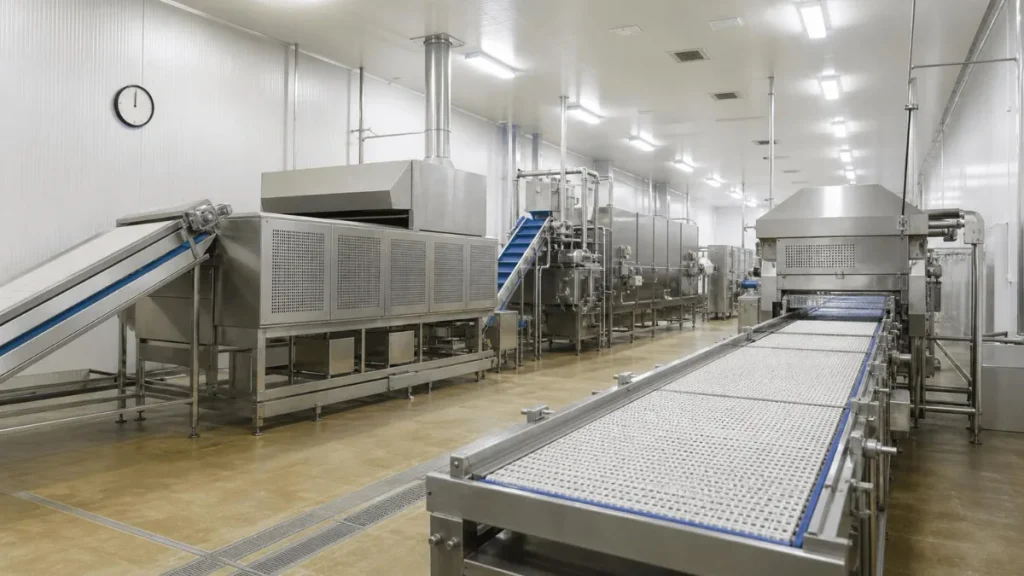
Conveyor systems are widely used in:
Conveyor systems contain bearings, chains, rollers, gearboxes and drive assemblies.
A suitable chain lubricant should have adequate adhesion, wear protection and resistance to wash-off.
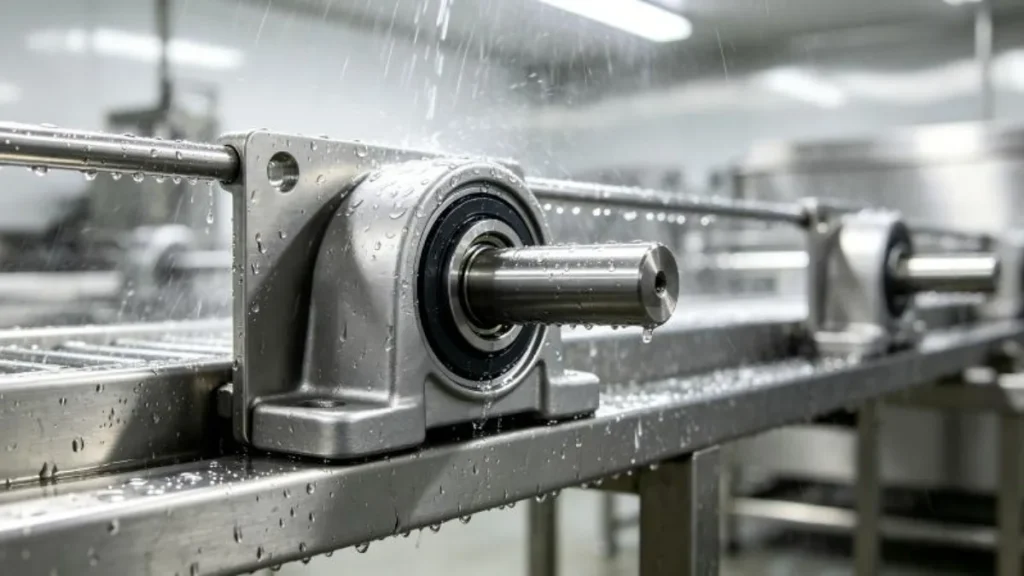
Bearings support rotating shafts and reduce friction between moving components. Common bearing applications include:
H1 grease may be required when bearing leakage could reach exposed food. The correct grease should be selected based on:
For example, a food-processing conveyor bearing may require an H1 NLGI 2 grease with good water resistance. However, the bearing manufacturer’s recommended grease type and viscosity must always be checked.
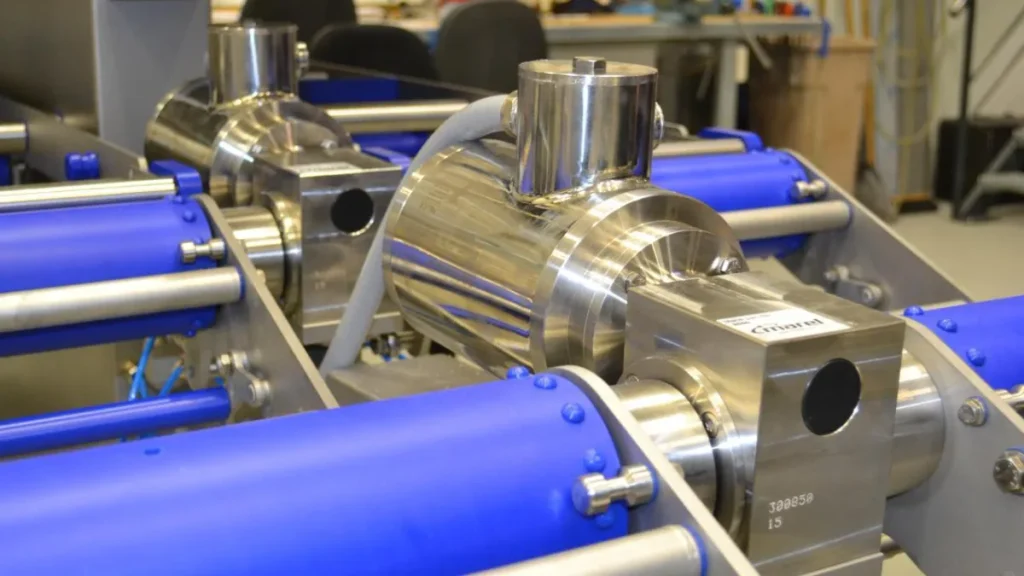
Gearboxes transmit mechanical power and reduce rotational speed. They are commonly found in:
Gearboxes may require ISO VG 150, 220, 320 or another specified viscosity grade. The correct grade depends on gearbox design, speed, load and temperature.
For example, Mobil SHC Cibus is a family of NSF H1-registered synthetic lubricants available in several viscosity grades, including ISO VG 32, 46, 68, 100, 150, 220, 320 and 460. mobil.com
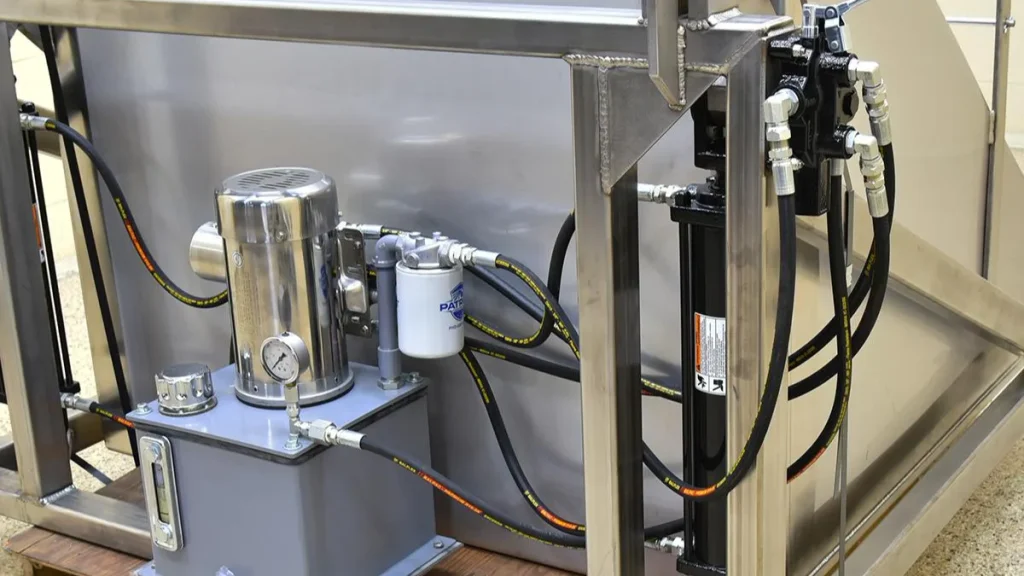
Hydraulic systems use pressurized fluid to transmit power. Typical applications include:
Hydraulic oil selection requires attention to viscosity, oxidation stability, anti-wear performance, filtration and seal compatibility.
An H1 hydraulic oil should be selected if leakage or another incidental-contact pathway could expose food. An H2 hydraulic oil may be used in an isolated system with no possible food-contact pathway.
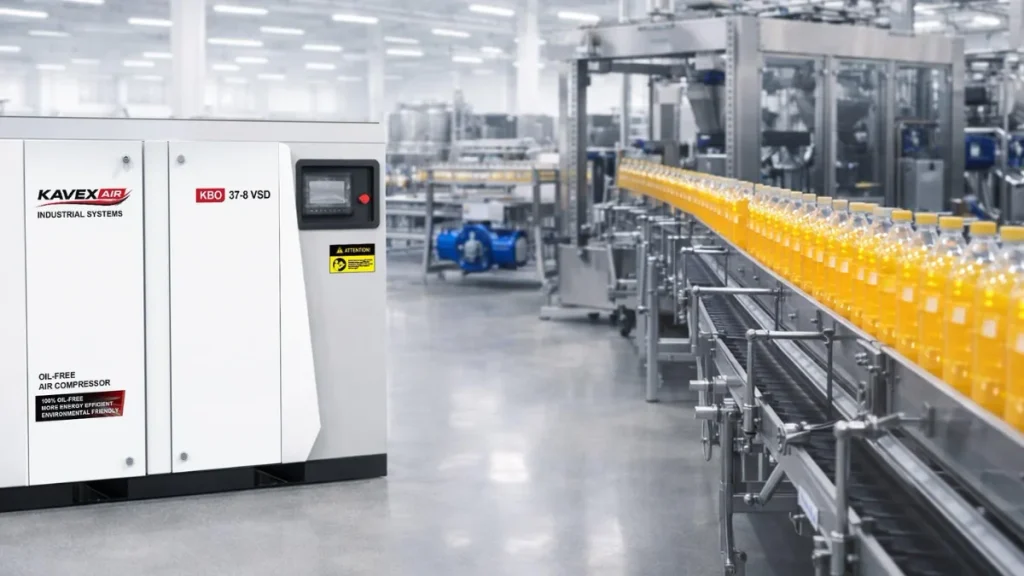
Air compressors supply compressed air to production equipment. They are used in:
The compressor lubricant must match the compressor manufacturer’s requirements. An important distinction is that an H1 lubricant in a compressor does not automatically make the compressed air suitable for food contact. Compressed-air quality must be assessed separately through appropriate filtration, drying, monitoring and food-safety controls.
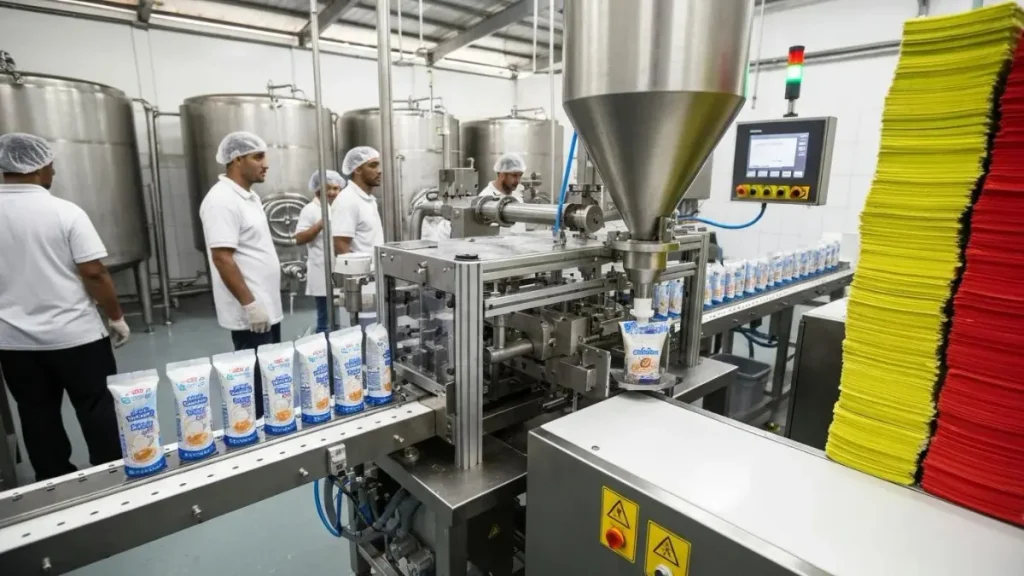
Mixers, filling machines and packaging equipment contain multiple lubrication points. Examples include:
H1 lubricants are particularly relevant where lubricated surfaces may accidentally contact food or food-contact packaging surfaces.
| Equipment | Possible H1 application | Possible H2 application |
|---|---|---|
| Conveyor | Exposed conveyor bearings | Isolated drive gearbox |
| Packaging machine | Lubricated components near products | Separated machine drives |
| Bakery equipment | Bearings near dough or baked goods | Isolated enclosed drives |
| Dairy equipment | Components with incidental-contact risk | Separated mechanical systems |
| Food mixer | Lubrication points near product zone | Isolated transmission |
| Hydraulic machine | Leakage pathway near food | Separated hydraulic power unit |
| Air compressor | Application-specific incidental-contact risk | Isolated compressor location |
| Industrial pump | Pump components with food-contact risk | Separated utility pump |
The table is a general application guide. Actual classification must be based on the equipment design, leakage pathway, hazard analysis and lubricant registration.
Both categories have their own benefits and limitations. The correct selection should balance food safety, equipment protection, operating cost and maintenance requirements.
1. Reduced food contamination risk
H1 lubricants are formulated for applications where incidental food contact may occur. They help reduce the potential consequences of accidental lubricant transfer.
2. Suitable for food-processing machinery
H1 products are available for bearings, gearboxes, chains, compressors and hydraulic systems.
3. Better food-safety risk management
Using suitable H1 lubricants at identified incidental-contact points can support a facility’s food-safety and HACCP controls.
4. Wide range of formulations
Manufacturers offer mineral-based and synthetic H1 products. Different viscosity grades and grease consistencies are available for different equipment.
5. Improved maintenance flexibility
A properly selected H1 lubricant can provide mechanical protection while supporting food-safety requirements.
1. Higher purchase cost in some cases
Some H1 products cost more than comparable conventional industrial lubricants because of formulation requirements, product testing and registration. However, the difference varies by product.
2. Formulation restrictions
H1 manufacturers must work within applicable ingredient requirements. This can limit additive choices compared with conventional industrial products.
3. Product selection requires verification
Not every lubricant marketed as food-grade is automatically NSF H1 registered. The exact product must be checked.
4. Does not eliminate contamination risk
H1 does not mean that unlimited lubricant contact with food is acceptable. Incorrect application, excessive lubrication and leakage must still be prevented.
1. Greater formulation flexibility
H2 lubricants can use a wider range of industrial lubricant technologies.
2. Suitable for isolated machinery
They can be useful in equipment that has no possibility of food contact.
3. Potential cost savings
Depending on the formulation and application, H2 lubricants may cost less than specialist H1 alternatives.
4. Wide industrial performance options
H2 products may be available for different operating conditions, loads and machinery types.
1. No incidental food-contact suitability
H2 lubricants must not be used where food contact is possible.
2. Requires effective equipment separation
The food-processing facility must maintain controls that prevent accidental contact.
3. Incorrect application can create safety problems
Using H2 grease on a bearing above exposed food can introduce a contamination hazard.
The cheapest lubricant is not necessarily the most economical. Consider a hypothetical production facility:
| Cost factor | Conventional H2 | Suitable H1 |
|---|---|---|
| Lubricant price | $20/kg | $30/kg |
| Annual consumption | 20 kg | 20 kg |
| Annual lubricant cost | $400 | $600 |
Illustrative figures only; not current market quotations. The H1 option costs $200 more per year in this example.
However, where incidental contact is possible, the H1 lubricant is the appropriate choice. The additional cost is part of the food-safety and maintenance requirements, not simply an optional upgrade. Where food contact is impossible, a suitable H2 lubricant may be economically appropriate.
Choosing a food-grade lubricant requires more than looking at the brand name. Buyers should verify the exact product, NSF category, viscosity, NLGI grade, operating temperature and equipment compatibility.
The following products are useful examples of H1 lubricant families with manufacturer-published technical information.
Product note: These are manufacturer-identified products, not independently tested recommendations. Amazon USA stock, prices, sellers and shipping availability could not be reliably confirmed in this research. The Amazon links below are product-search links, not verified individual listings.
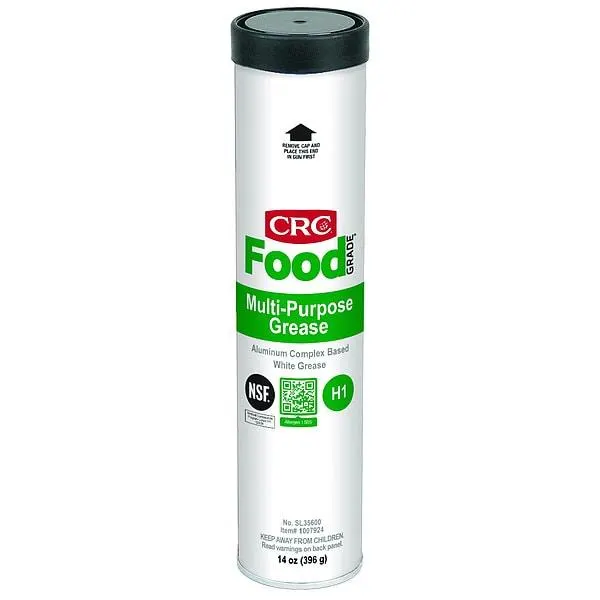
CRC Sta-Lube Multi-Purpose Food Grade Grease
NSF H1
Suitable for selected food-processing bearings, bottling machinery, packaging machinery and conveyor applications.
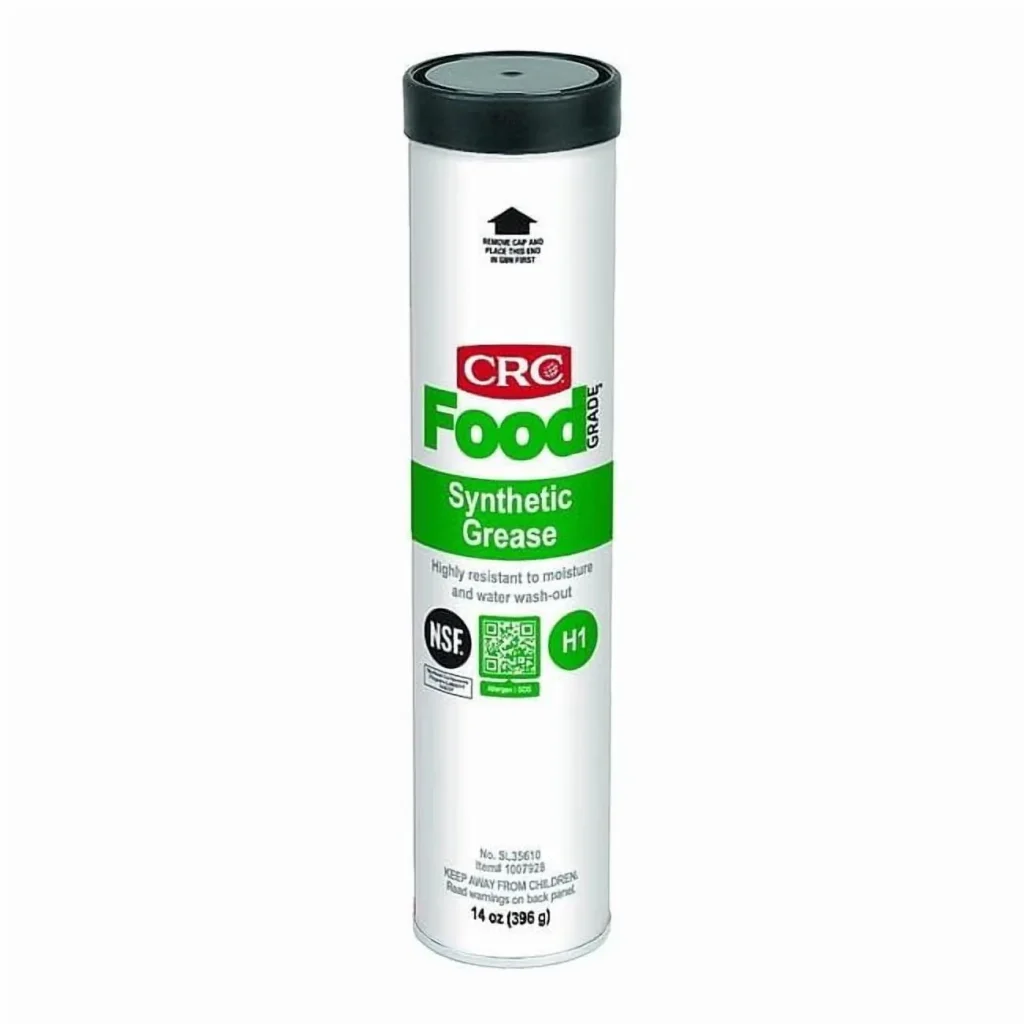
CRC Synthetic Food Grade Grease SL35610
NSF H1
Designed for selected higher-temperature food-processing lubrication applications.
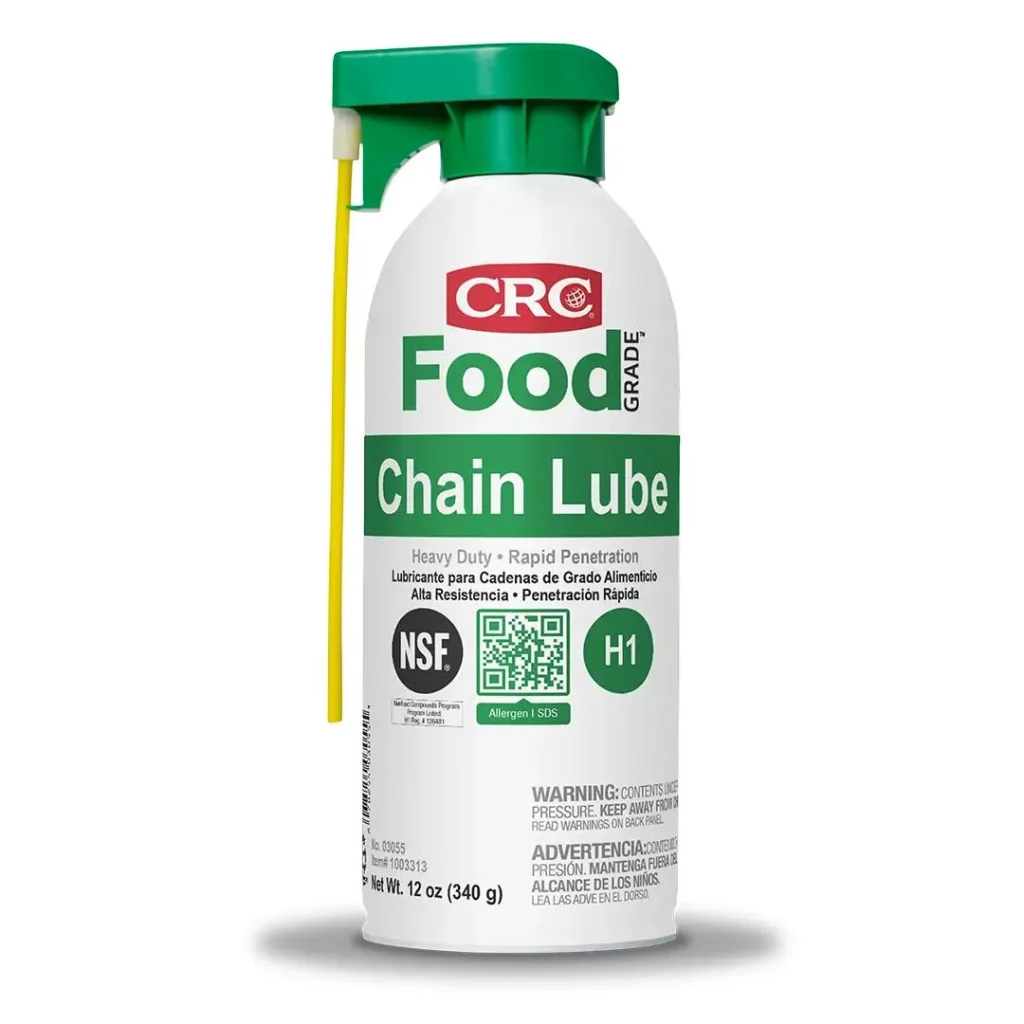
CRC Food Grade Chain Lube 03055
NSF H1
Suitable for selected conveyor chains, packaging equipment and hoist-chain applications.
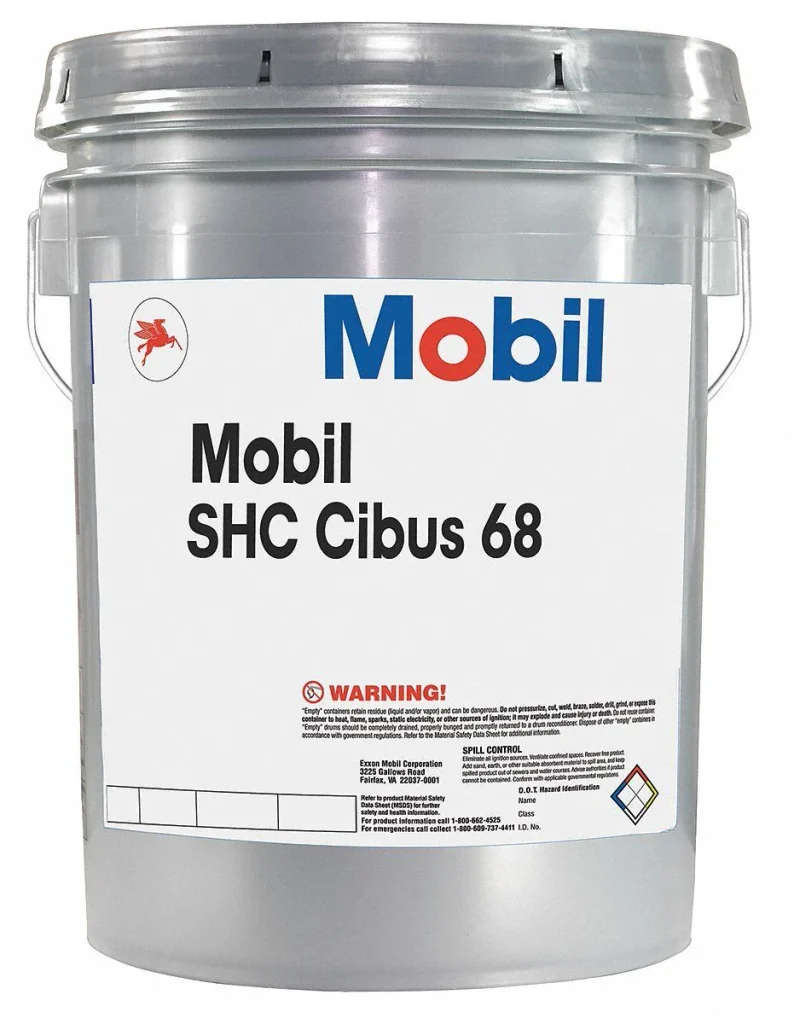
NSF H1
A product family worth investigating for food and beverage machinery requiring specific industrial oil grades.
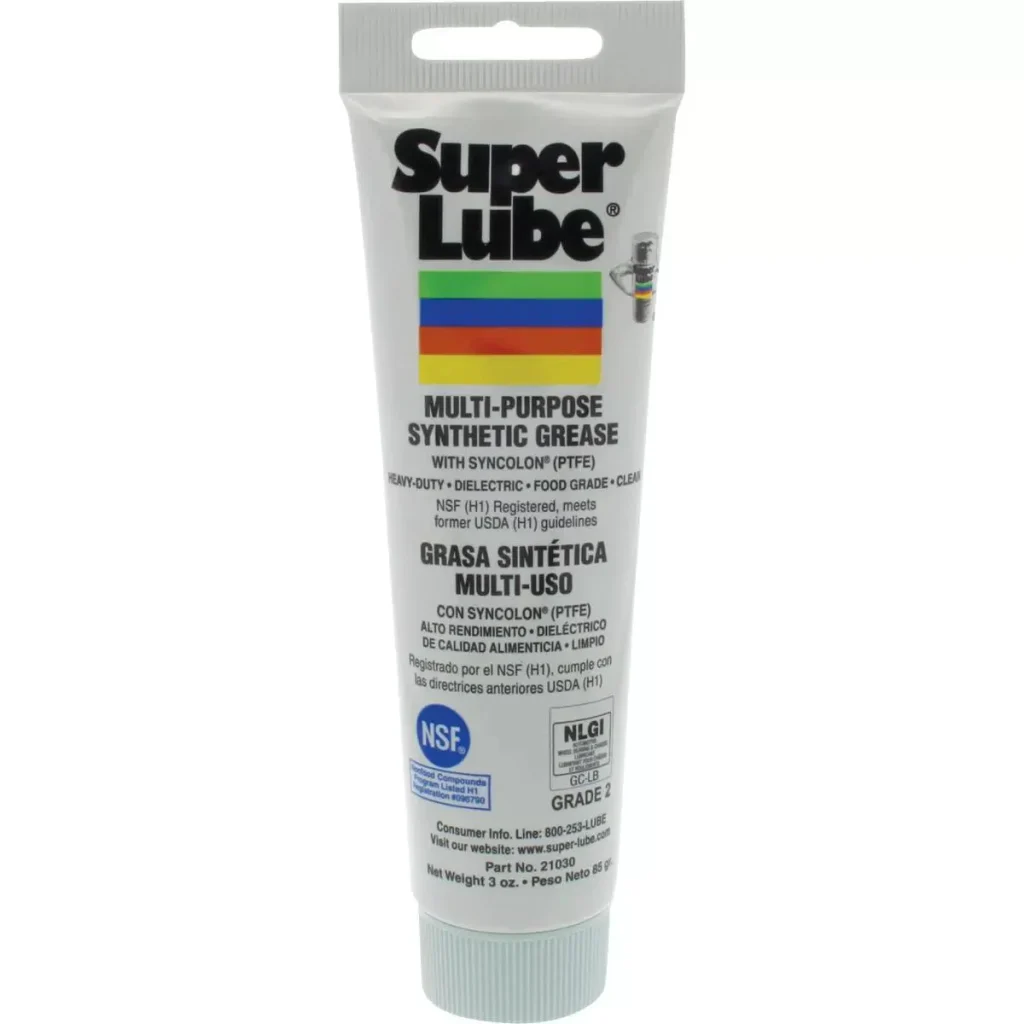
Super Lube Multi-Purpose Synthetic Grease
H1 registered product family
Check the exact NLGI grade and SKU before purchase. Different variants should not be assumed to have identical specifications.
H2 products are less suitable for a general food-grade consumer product shortlist because they are not intended for food contact. For H2 applications, search for the exact industrial lubricant required by the equipment manufacturer, then verify its H2 listing.
Do not assume that a conventional industrial grease automatically qualifies as NSF H2. Also, do not substitute an H2 product for an H1 product simply because it is cheaper.
| Product | Category | Main application |
|---|---|---|
| CRC Sta-Lube SL35600 | H1 | General-purpose grease |
| CRC Synthetic SL35610 | H1 | Higher-temperature grease |
| CRC 03055 | H1 | Chains and conveyors |
| Mobil SHC Cibus | H1 | Hydraulic, gear, compressor and bearing oils |
| Super Lube specified H1 variants | H1 | Multi-purpose grease |
Buying the correct lubricant is important for both equipment reliability and food safety. Use the following technical checklist before ordering a product.
First, identify whether the lubricant or lubricated component can come into contact with food.
Ask:
If incidental food contact is possible, investigate an appropriate H1 product. If contact is impossible, H2 may be appropriate.
Never rely only on phrases such as:
Verify the exact product in the NSF White Book. Check the registration category and product details before purchase.
Different machines need different lubricant types.
| Equipment | Possible lubricant type |
|---|---|
| Ball bearing | Bearing grease |
| Roller bearing | Bearing grease or circulating oil |
| Gearbox | Gear oil |
| Hydraulic system | Hydraulic oil |
| Conveyor chain | Chain lubricant |
| Air compressor | Compressor oil |
| Sliding mechanism | Grease or slideway oil |
| Pneumatic equipment | Manufacturer-specified lubricant |
An H1 designation alone does not tell you whether a product is suitable for every machine.
If you are selecting oil, compare the required viscosity with the equipment manufacturer’s specifications.
For example:
Do not choose a higher viscosity simply because the machinery operates under heavy load. The complete operating conditions must be considered.
For grease applications, verify the required NLGI grade. Common grades include:
NLGI 2 is commonly used for general-purpose bearing greases, but it is not suitable for every bearing or lubrication system. For automatic lubrication systems, the grease pumpability and line dimensions must also be considered.
Compare the actual machine temperature with the manufacturer’s recommended operating range. Consider:
Do not use the drop point as the maximum recommended operating temperature.
Food-processing machinery often experiences frequent cleaning and washdown. Water can remove grease from bearings and increase corrosion risk. Look for suitable specifications covering:
Before changing lubricant brands or formulations, evaluate compatibility. Important factors include:
When changing grease types, do not assume that two products are compatible simply because both are NLGI 2. An appropriate cleaning or conversion procedure may be necessary.
Do not compare products only by price per kilogram or litre. Consider:
A higher-priced lubricant may offer better lifecycle economics in a suitable application, but performance claims should be supported by manufacturer data and actual operating experience.
Before purchasing, download the manufacturer’s TDS and SDS. A technical data sheet should ideally provide:
The Safety Data Sheet provides important information about handling, storage and workplace safety.
NSF H1 vs H2 – Which Lubricant Should You Choose?
NSF H1 and H2 lubricants play different roles in food-processing and industrial manufacturing environments. The primary difference is their suitability for food-contact risk.
Choose NSF H1 when:
Choose NSF H2 when:
From an engineering perspective, the NSF classification is only one part of lubricant selection. You must also evaluate viscosity, NLGI consistency, temperature range, base oil, additive technology, water resistance, mechanical stability and equipment compatibility.
For US food-processing facilities, checking the exact NSF registration and manufacturer’s technical data sheet should be an essential step before purchasing. The best lubricant is not necessarily the most expensive or the most advanced synthetic product. It is the lubricant that meets food-safety requirements and provides the required mechanical performance under actual operating conditions.
RetailGlobe.in recommends verifying the exact lubricant grade and NSF registration before purchasing any food-processing lubricant.
The following sources support the technical information used in this article.
Editorial Disclaimer
This article is intended for educational and informational purposes. Technical specifications and product information are based on publicly available manufacturer documentation, regulatory references and industry resources. Products have not been personally tested or independently laboratory-verified by RetailGlobe.in. Specifications, formulations, registration status and availability may change. Always consult the latest manufacturer Technical Data Sheet (TDS), Safety Data Sheet (SDS) and applicable NSF registration before purchasing or using a lubricant.
Amazon Affiliate Disclosure
RetailGlobe.in may participate in the Amazon Associates Program. As an Amazon Associate, we earn from qualifying purchases. This does not increase the price you pay.
NSF H1 lubricants are intended for machinery applications where incidental food contact may occur.
NSF H2 lubricants are intended for machinery where there is no possibility of food contact.
No. H2 lubricants are not intended for food contact. They are used in industrial equipment located in areas where food contamination through lubricant contact is not possible.
Generally, an appropriate H1 lubricant can be considered for an H2 application if its technical properties meet the machinery requirements.
However, verify viscosity, material compatibility, equipment specifications and operating conditions before substitution.
No, not where incidental food contact is possible.
H2 lubricant is not intended for applications where it may accidentally contact food.
No. NSF H1 registration and FDA ingredient regulations are different things.
H1 lubricants are formulated for incidental food contact under applicable requirements, including FDA 21 CFR 178.3570. This does not mean the FDA individually approves the lubricant as food or an edible product.
The 10 ppm figure is associated with specified ingredient limitations under applicable food-contact requirements, including certain lubricant base oils.
It should not be interpreted as permission to deliberately introduce 10 ppm of any lubricant into food.
The applicable regulatory conditions and ingredient-specific restrictions must be followed.
Not automatically.
Synthetic lubricants may provide advantages in oxidation stability, temperature performance and service life, depending on the formulation.
Mineral-oil-based H1 products can also provide effective lubrication.
The correct choice depends on the machine, operating temperature, viscosity requirement and lubricant performance data.
NSF H1 is a lubricant registration category for incidental food-contact applications.
ISO 21469 is an international standard covering hygiene requirements for the formulation, manufacture and use of lubricants that may come into contact with products during processing.
They are related but not identical. H1 registration does not automatically establish ISO 21469 certification.
There is no single best viscosity.
Common industrial grades include ISO VG 150, 220, 320 and 460.
The correct grade depends on gearbox design, speed, load, temperature and manufacturer recommendations.
NLGI 2 is a common choice for general-purpose bearing applications.
However, high-speed bearings, centralized lubrication systems and low-temperature equipment may require different grease consistencies.
Always follow bearing and lubrication-system specifications.
Yes, if the specific H1 grease is suitable for the motor bearing’s speed, load, temperature, thickener requirements and manufacturer recommendations.
Not every H1 grease is suitable for electric motor bearings.
Not every H1 grease is waterproof.
Some H1 greases provide good water resistance, but performance varies with the base oil, thickener and formulation.
Check the manufacturer’s water-washout and water-spray-off test results.
Mixing different lubricants is not recommended without compatibility verification.
Different base oils, additives and grease thickeners may react or produce inconsistent lubrication performance.
Check manufacturer compatibility data before mixing.
There is no universal replacement interval.
The lubrication schedule depends on bearing speed, load, temperature, moisture, contamination, grease type and equipment operating hours.
Follow the manufacturer’s lubrication schedule and adjust it using condition-monitoring results where appropriate.
You can use the official NSF White Book directory.
Search using the exact product name, manufacturer and category.
No. H1 is designed for incidental contact, not intentional direct application to food.
Products intended for specific direct food-contact applications may require a different classification, such as an appropriate 3H release agent, depending on the intended use.
No. It reduces potential risk in incidental-contact applications when correctly selected and used.
Proper equipment design, leak prevention, cleaning, maintenance and food-safety procedures are still necessary.
Neither is universally better.
Use H1 where incidental food contact is possible. Use an appropriate H2 lubricant where food contact is impossible.
The decision should be based on the plant’s hazard analysis and equipment requirements.

Welcome!
I am the Founder of RetailGlobe.in and a digital content creator focused on industrial tools, machinery, equipment, and technical product information. I develops product guides, reviews, comparisons, and practical buying insights to help engineers, technicians, workshop owners, and industrial buyers make informed purchasing decisions in India and the USA.
Thank you for visiting, and I look forward to helping you make informed purchasing decisions!
