Our Location
Killa-Pardi, Dist. Valsad, 396125

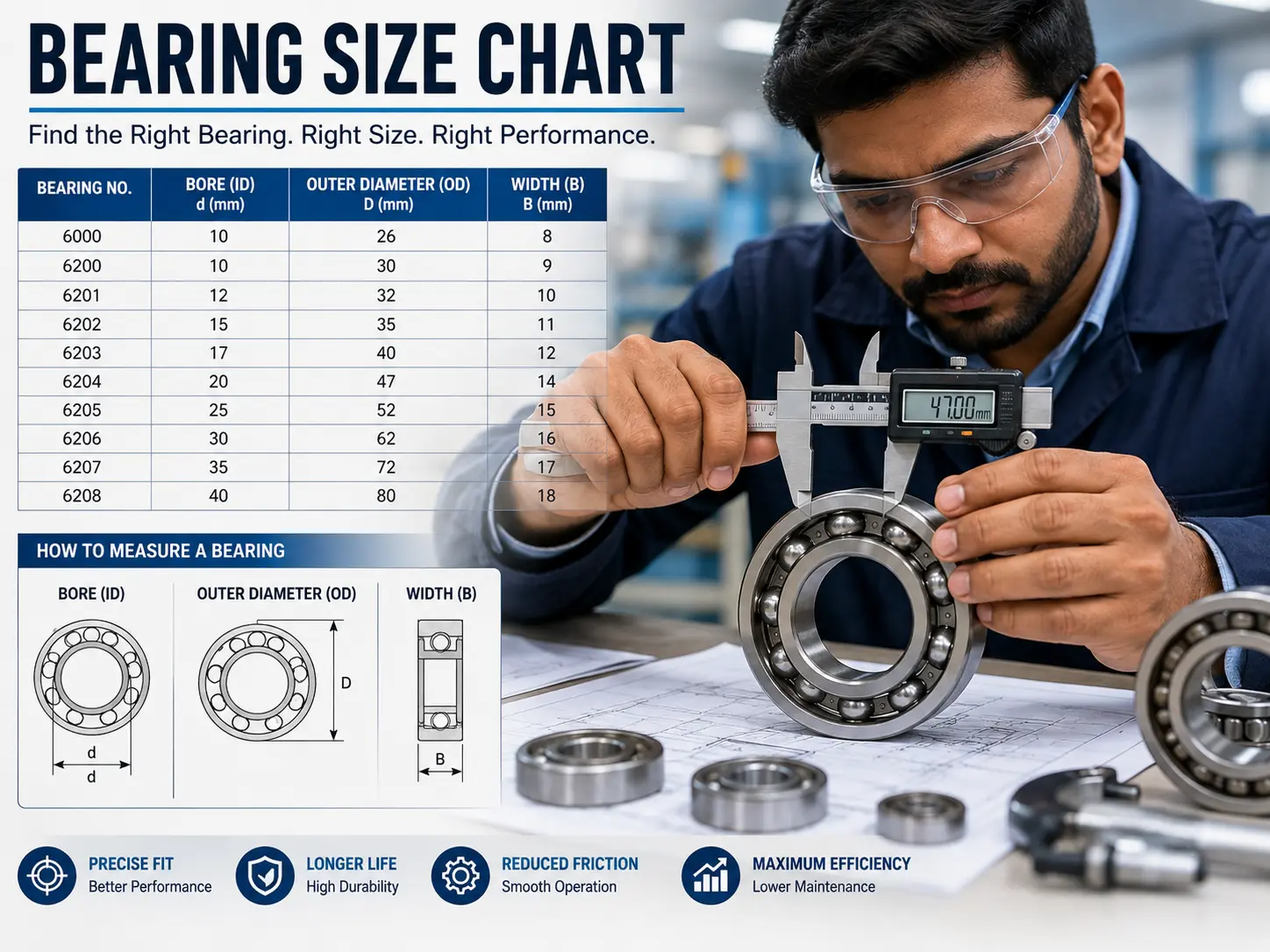
Choosing the correct bearing is essential for the reliable operation of motors, pumps, gearboxes, conveyors, fans, agricultural machinery and many other industrial machines. One of the easiest ways to identify the correct bearing is by using a bearing size chart.
A bearing size chart normally provides three primary dimensions:
For example, a standard 6205 bearing has a 25 mm bore, 52 mm outside diameter and 15 mm width. These dimensions are important when checking whether the bearing will correctly fit the shaft and housing.
A bearing size chart is a reference table that shows the standardized dimensions and, depending on the manufacturer, additional specifications of different bearings.
The most important dimensions are:
The ID, also called the bore diameter, is the diameter of the hole in the center of the bearing. It determines the shaft size that the bearing is designed to fit.
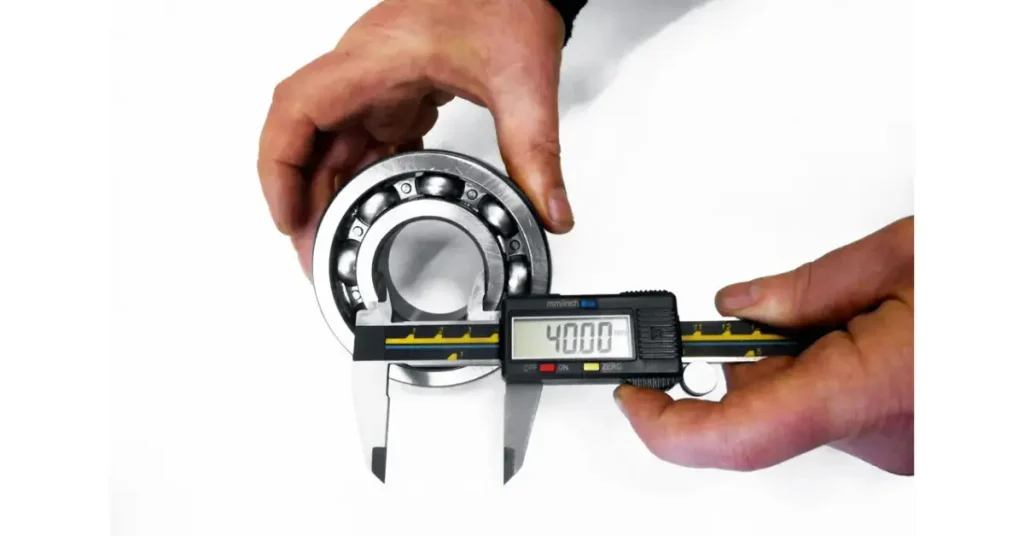
For example:
The OD is the outside diameter of the bearing’s outer ring. It is particularly important because the bearing must fit correctly inside the machine’s housing.
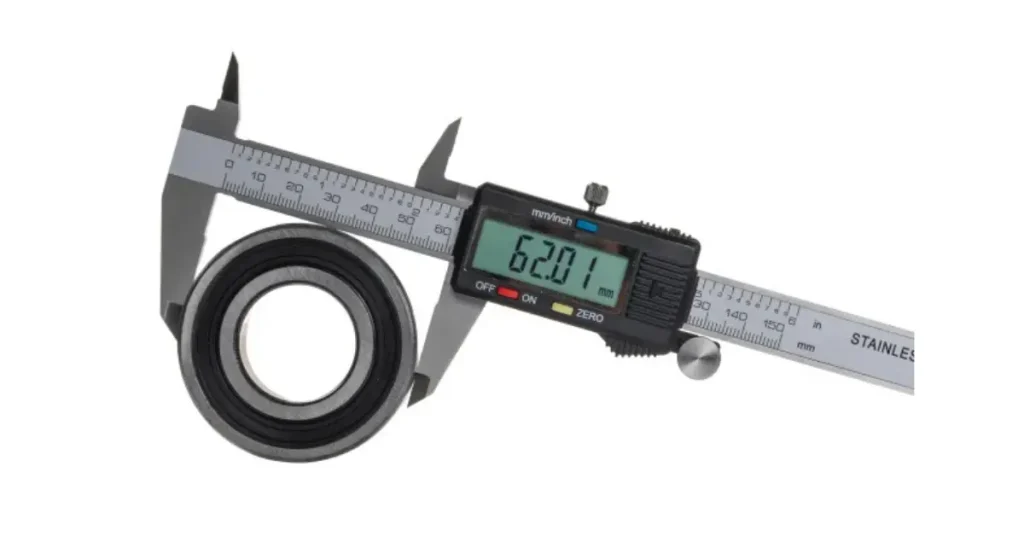
For example:
Bearing width is the overall axial thickness of the bearing.
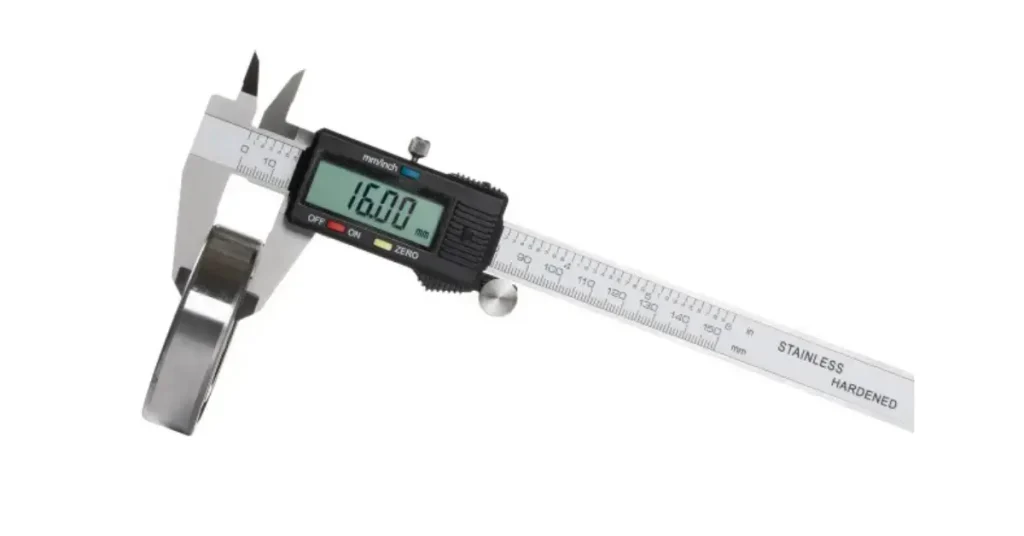
For example:
Therefore, a bearing specification such as:
6205 = 25 × 52 × 15 mm
means:
25 mm ID × 52 mm OD × 15 mm Width.
The 6200 series is one of the most commonly encountered families of single-row deep groove ball bearings. The following dimensions are based on SKF published dimensional data.
| Bearing Number | ID / Bore (mm) | OD (mm) | Width (mm) |
|---|---|---|---|
| 6200 | 10 | 30 | 9 |
| 6201 | 12 | 32 | 10 |
| 6202 | 15 | 35 | 11 |
| 6203 | 17 | 40 | 12 |
| 6204 | 20 | 47 | 14 |
| 6205 | 25 | 52 | 15 |
| 6206 | 30 | 62 | 16 |
| 6207 | 35 | 72 | 17 |
| 6208 | 40 | 80 | 18 |
| 6209 | 45 | 85 | 19 |
| 6210 | 50 | 90 | 20 |
| 6211 | 55 | 100 | 21 |
| 6212 | 60 | 110 | 22 |
| 6213 | 65 | 120 | 23 |
| 6214 | 70 | 125 | 24 |
| 6215 | 75 | 130 | 25 |
| 6216 | 80 | 140 | 25 |
| 6217 | 85 | 150 | 28 |
| 6218 | 90 | 160 | 30 |
| 6219 | 95 | 170 | 32 |
| 6220 | 100 | 180 | 34 |
The same dimensional relationship can also be seen in SKF’s published 6200-series bearing documentation.
Understanding bearing numbers can make bearing selection much easier.
Consider: 6205
The basic bearing number is 6205. The first two digits generally identify the bearing series/design. The final two digits identify the bore size. For standard metric bearings with bore codes from 04 upward, the bore is commonly obtained by multiplying the last two digits by 5.
For example:
05 × 5 = 25 mm
Therefore:
6205 = 25 mm bore
However, this rule has important exceptions for smaller bore codes such as 00, 01, 02 and 03. Common examples are:
| Bore Code | Bore Diameter |
|---|---|
| 00 | 10 mm |
| 01 | 12 mm |
| 02 | 15 mm |
| 03 | 17 mm |
| 04 | 20 mm |
| 05 | 25 mm |
| 06 | 30 mm |
| 07 | 35 mm |
| 08 | 40 mm |
| 09 | 45 mm |
| 10 | 50 mm |
This is why 6201 does not mean 5 mm bore. Its standard bore is 12 mm.
SKF’s 6201 product specification, for example, lists a 12 mm bore, 32 mm outside diameter and 10 mm width.
Three measurements should always be checked before ordering a replacement bearing.
The bearing’s ID must correspond to the shaft diameter and the required fit.
For example, if a shaft is designed for a 25 mm bearing bore, a 6205 may be appropriate because its nominal bore is 25 mm.
The outer diameter must fit the housing bore.
For a 6205:
OD = 52 mm
Therefore, the machine housing must be designed around the required 52 mm bearing outside diameter and the appropriate tolerance/fit.
The bearing must also fit within the available axial space.
A 6205 has a width of: 15 mm
If the machine requires a bearing with a different width, simply matching the ID and OD may not be enough.
Suppose a factory machine has the following existing bearing:
You check a bearing size chart. The 6205 bearing dimensions are:
ID = 25 mm , OD = 52 mm, Width = 15 mm
Therefore: 6205 = 25 × 52 × 15 mm
SKF’s published data confirms these nominal dimensions. This makes 6205 a dimensional match. However, dimensional compatibility is only the first step.
You should also check:
A bearing should never be selected only because its ID, OD and width match.
Consider a small industrial electric motor using a deep groove ball bearing. Suppose the motor shaft is designed for a 35 mm bearing bore. From the 6200 bearing size chart:
6207 = 35 × 72 × 17 mm
Therefore:
SKF’s published 6207 data lists these dimensions and also provides load-rating and speed information for its bearing variants. But imagine that the original motor bearing is actually a 6207-2RS1.
The 6207 identifies the basic bearing size, while 2RS1 identifies the sealing configuration used by that manufacturer. So:
6207 → basic bearing size
2RS1 → sealing designation
The dimensional size remains:
35 × 72 × 17 mm
This is an important distinction when replacing bearings.
The 6000 series is another common family of deep groove ball bearings.
Some commonly used sizes include:
| Bearing | Typical ID | Typical OD | Typical Width |
|---|---|---|---|
| 6000 | 10 mm | 26 mm | 8 mm |
| 6001 | 12 mm | 28 mm | 8 mm |
| 6002 | 15 mm | 32 mm | 9 mm |
| 6003 | 17 mm | 35 mm | 10 mm |
| 6004 | 20 mm | 42 mm | 12 mm |
| 6005 | 25 mm | 47 mm | 12 mm |
| 6006 | 30 mm | 55 mm | 13 mm |
| 6007 | 35 mm | 62 mm | 14 mm |
| 6008 | 40 mm | 68 mm | 15 mm |
One important point is that bearings having the same bore do not necessarily have the same OD or width.
For example, a 25 mm bore can appear in different bearing series.
A 6205 is:
25 × 52 × 15 mm
while a 6005 is:
25 × 47 × 12 mm
Therefore, selecting a bearing based only on shaft diameter can result in the wrong bearing.
Bearing series controls the general cross-sectional size of the bearing.
For the same bore diameter, different series can have different outside diameters and widths.
For example, consider a 25 mm bore:
6005
25 × 47 × 12 mm
6205
25 × 52 × 15 mm
Both have:
25 mm ID
But their OD and width are different.
This means they are not automatically interchangeable. The housing and available axial space may be designed specifically for one series. This is one of the most common mistakes when selecting replacement bearings.
The 6300 series is generally heavier than the 6200 series for comparable bore sizes.
Common examples include:
| Bearing | ID (mm) | OD (mm) | Width (mm) |
|---|---|---|---|
| 6300 | 10 | 35 | 11 |
| 6301 | 12 | 37 | 12 |
| 6302 | 15 | 42 | 13 |
| 6303 | 17 | 47 | 14 |
| 6304 | 20 | 52 | 15 |
| 6305 | 25 | 62 | 17 |
| 6306 | 30 | 72 | 19 |
| 6307 | 35 | 80 | 21 |
| 6308 | 40 | 90 | 23 |
| 6309 | 45 | 100 | 25 |
| 6310 | 50 | 110 | 27 |
These examples demonstrate why the bearing series should always be considered along with the bore.
For example:
6205 = 25 × 52 × 15 mm
whereas:
6305 = 25 × 62 × 17 mm
Both have a 25 mm bore, but the 6305 is significantly larger externally.
Use the following step-by-step method.
Measure the shaft diameter using a calibrated vernier caliper or micrometer. Suppose the shaft measures approximately: 25 mm
Do not immediately order a bearing based only on this measurement.
Measure the housing bore. Suppose it is approximately: 52 mm
Now you have:
ID = 25 mm
OD = 52 mm
Suppose the available axial space is: 15 mm
You now have: 25 × 52 × 15 mm
Search the bearing size chart. A standard 6205 matches: 25 × 52 × 15 mm
A 6205 is a single-row deep groove ball bearing. But your application may require:
Therefore, dimensions alone do not determine the correct bearing type.
A bearing can be available in different sealing configurations. Common designations include:
Open bearing
2Z / ZZ – shielded bearing
2RS – rubber-sealed bearing
The exact designation and naming convention can vary by manufacturer.
SKF’s product listings, for example, show 6200-series variants such as 6205-2Z and 6205-2RS1 while retaining the same basic dimensional envelope for the bearing size.
Another important specification is internal clearance.
A bearing marked: 6205-2RS-C3
generally indicates:
C3 clearance can be useful in applications where operating temperature, interference fits or other conditions require additional internal clearance. However, C3 should not automatically be considered “better” than normal clearance. The correct clearance depends on the application.
Two bearings can have similar dimensions but different load capacities. For example, SKF’s published data for different bearing series includes basic dynamic and static load ratings along with speed information. Therefore, when choosing a bearing, consider both:
Dimensional compatibility and Performance compatibility
A bearing that physically fits may still fail prematurely if it is overloaded or operated outside its appropriate speed, temperature or lubrication conditions.
Suppose you need a bearing for a 25 mm shaft. You might find:
6005, 6205, 6305
All three can have a 25 mm bore, but their dimensions differ.
| Bearing | ID | OD | Width |
|---|---|---|---|
| 6005 | 25 mm | 47 mm | 12 mm |
| 6205 | 25 mm | 52 mm | 15 mm |
| 6305 | 25 mm | 62 mm | 17 mm |
Therefore, if the machine housing is designed for a 52 mm OD, a 6005 or 6305 would not be a direct dimensional replacement for a 6205. This example shows why a complete bearing size chart is more useful than simply searching for a bearing by shaft diameter.
Bearings are available in metric and inch-based dimensions. Metric bearings are commonly specified in millimetres.
For example:
6205 = 25 × 52 × 15 mm
Some bearing families use inch bore dimensions and different designation systems. When replacing a bearing, verify whether the original machine uses:
Never assume that a similar-looking metric bearing is interchangeable with an inch bearing.
If the bearing number is unreadable, you can identify it by measuring its dimensions. Take three measurements:
Measure the center hole.
Example: 25 mm
Measure across the outside ring.
Example: 52 mm
Measure the thickness.
Example: 15 mm
You now have: 25 × 52 × 15 mm
Search a reliable bearing catalogue using these dimensions. If the result corresponds to 6205, verify the bearing type and application before purchasing.
Online marketplaces often contain incomplete or inconsistent product descriptions. A reliable bearing catalogue can provide:
SKF’s online marketplace, for example, publishes detailed dimensions for individual bearing products. Its 6201 listing specifies a 12 mm bore, 32 mm OD and 10 mm width. For technical applications, manufacturer catalogue data should be preferred over an unverified seller listing.
| Mistake 1: Choosing Only by ID | A 25 mm shaft does not automatically mean every 25 mm bore bearing will fit. Check OD and width. |
| Mistake 2: Ignoring Bearing Series | 6005, 6205 and 6305 have the same 25 mm bore but different dimensions. |
| Mistake 3: Ignoring Seals | Open, shielded and sealed bearings have different application characteristics. |
| Mistake 4: Ignoring Clearance | Normal clearance and C3 clearance are not interchangeable in every application. |
| Mistake 5: Ignoring Load | A dimensionally correct bearing may still be unsuitable for a high-load application. |
| Mistake 6: Ignoring Speed | High-speed applications require careful checking of bearing speed capability, lubrication and operating temperature. |
| Mistake 7: Measuring a Damaged Bearing Incorrectly | A worn bearing may no longer represent its original dimensions accurately. If possible, identify the original bearing number from the machine manual or manufacturer’s documentation. |
For common 6200-series bearings:
| Bearing | Bore | OD | Width |
|---|---|---|---|
| 6201 | 12 mm | 32 mm | 10 mm |
| 6202 | 15 mm | 35 mm | 11 mm |
| 6203 | 17 mm | 40 mm | 12 mm |
| 6204 | 20 mm | 47 mm | 14 mm |
| 6205 | 25 mm | 52 mm | 15 mm |
| 6206 | 30 mm | 62 mm | 16 mm |
| 6207 | 35 mm | 72 mm | 17 mm |
| 6208 | 40 mm | 80 mm | 18 mm |
| 6209 | 45 mm | 85 mm | 19 mm |
| 6210 | 50 mm | 90 mm | 20 mm |
This table is particularly useful when identifying commonly used deep groove ball bearings. SKF’s published data supports these nominal dimensions.
Imagine a conveyor roller in a small manufacturing plant. The technician removes the old bearing but the number is damaged.
Measurements are:
Using a bearing size chart, the technician finds: 6204 = 20 × 47 × 14 mm
SKF’s catalogue data confirms these dimensions for the 6204 bearing. The technician should then verify:
If all specifications match the machine requirements, the 6204 can be considered as the replacement. This is a much safer process than simply searching online for “20 mm bearing.”
Bearing size also influences load-carrying capacity, but bearing life depends on several factors.
For rolling bearings, calculated rating life is commonly based on the relationship between the basic dynamic load rating and equivalent dynamic bearing load.
For ball bearings, the commonly used basic rating-life relationship is:
L10 = (C/P)³
Where:
For roller bearings, the exponent is commonly: 10/3
Therefore: L10 = (C/P)^(10/3)
This demonstrates why simply selecting a larger bearing is not always the complete solution. Types of Load, speed, lubrication, contamination, mounting and operating conditions all affect actual service life.
If the calculated Bearing Life (L10 life) is expressed in million revolutions, approximate life in operating hours can be calculated using:
L10h = (L10 × 1,000,000) / (60 × n)
Where:
Suppose: L10 = 100 million revolutions
and: n = 1,500 rpm
Then:
L10h = (100 × 1,000,000) / (60 × 1,500)
L10h ≈ 1,111 hours
This is a calculated rating life, not a guarantee that the bearing will physically last exactly that number of hours.
When creating your own bearing database or purchasing list, record at least:
| Parameter | Example |
|---|---|
| Bearing Number | 6205 |
| Bearing Type | Deep Groove Ball Bearing |
| ID | 25 mm |
| OD | 52 mm |
| Width | 15 mm |
| Seal | Open / 2Z / 2RS |
| Clearance | CN / C3 |
| Material | Bearing Steel |
| Cage | Steel / Polyamide / Brass |
| Dynamic Load Rating | Manufacturer specific |
| Static Load Rating | Manufacturer specific |
| Speed | Manufacturer specific |
This makes bearing selection much easier for maintenance teams and purchasing departments.
A bearing size chart is one of the most useful tools for identifying and selecting the correct bearing. The three most important dimensions are ID, OD and width.
However, correct bearing selection involves more than dimensions. You should also verify the bearing series, load capacity, operating speed, internal clearance, sealing, lubrication, temperature and application requirements.
For maintenance and replacement work, the best approach is:
Measure → Identify → Check Size → Check Bearing Type → Verify Load & Speed → Check Seal/Clearance → Select the Correct Bearing.
A properly selected bearing can improve machine reliability, reduce unexpected downtime and help prevent premature bearing failure.
For technicians, engineers, maintenance professionals and industrial buyers, keeping a bearing size chart available is therefore a simple but extremely valuable practice.
A bearing size chart lists bearing dimensions such as bore diameter, outside diameter and width. More advanced charts may also include load ratings, speed limits, clearance and sealing information.
Measure the bearing’s ID, OD and width, or read the bearing number printed on its side.
A standard 6205 bearing has a nominal size of:
25 × 52 × 15 mm
That means 25 mm bore, 52 mm outside diameter and 15 mm width.
A 6204 bearing is:
20 × 47 × 14 mm.
A 6207 bearing is:
35 × 72 × 17 mm.
No. Both may have a 25 mm bore, but their outside diameters and widths are different.
6205: 25 × 52 × 15 mm
6305: 25 × 62 × 17 mm
Therefore, they should not be treated as direct replacements without checking the machine design.
Not by itself. Bearing series, internal geometry, material, manufacturer, operating conditions and other design factors influence load capacity.
ID means Inside Diameter, also called bore diameter.
OD means Outside Diameter.
B generally represents the bearing width for many radial bearing types.

Welcome! I am a dedicated entrepreneur running an industrial affiliate product website, helping businesses and professionals find the best tools, equipment, and resources for their needs. With a passion for industrial products and a keen eye for quality, I curate and recommend top-performing items that enhance efficiency and reliability.
Through my platform, I aim to simplify the buying process by providing valuable insights, expert reviews, and trusted affiliate links to high-quality industrial products. Whether you’re looking for the latest machinery, tools, or safety gear, I strive to connect you with the best solutions available.
Thank you for visiting, and I look forward to helping you make informed purchasing decisions!
