Our Location
Killa-Pardi, Dist. Valsad, 396125

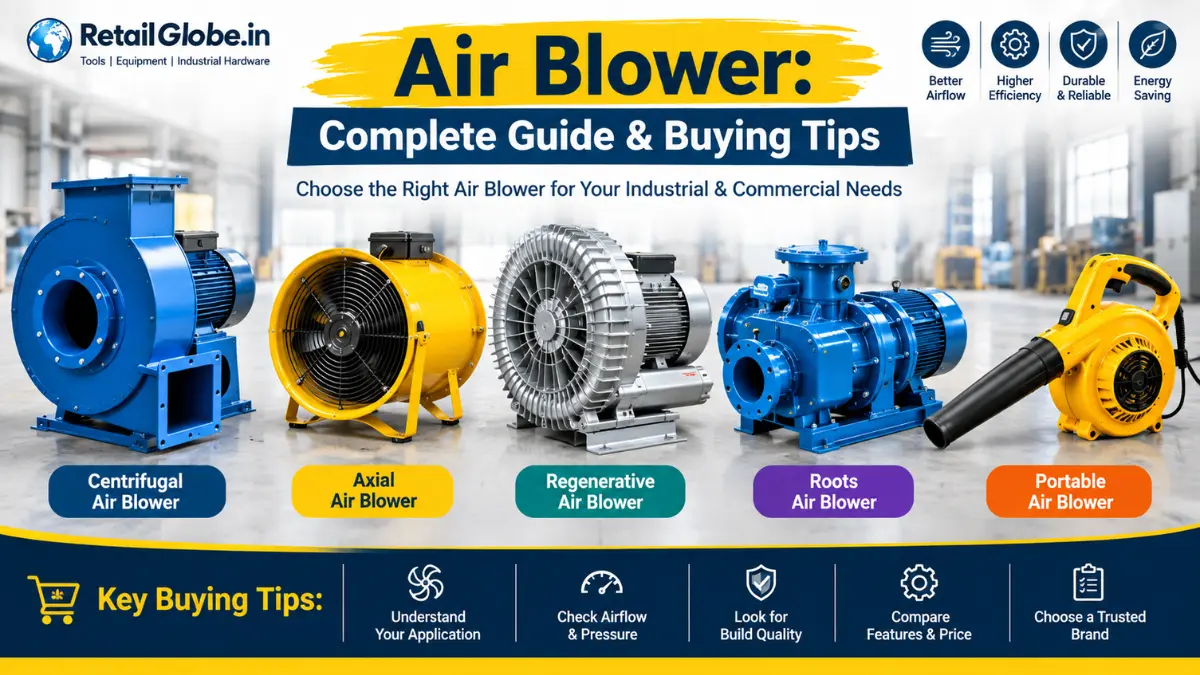
An air blower is a mechanical or electrically powered device that moves a large volume of air to create airflow and, depending on its design, useful air pressure. Air Blower Machines are widely used for dust removal, industrial cleaning, drying, ventilation, cooling, machinery maintenance and material-handling applications.
Unlike a simple fan that is mainly designed to circulate air, a blower is generally selected when a more directed and controlled airflow is required. Air Pumps are available in many forms, including portable electric blowers, cordless blowers, centrifugal blowers, axial blowers, regenerative blowers and industrial high-pressure blowers.
In simple terms:
An air blower is a device that takes in air and pushes or directs it toward a desired location using a motor and rotating or moving components.
The right blower depends on the required airflow, pressure, operating time, application, power source and environment.
An Air Pump works by using an electric motor to rotate an impeller or fan at high speed. The rotating impeller draws air through the inlet and increases its pressure and velocity. The pressurized air is then directed through an outlet or nozzle for blowing, cleaning, drying, or ventilation. Different blower designs produce varying airflow (CFM) and pressure levels for specific industrial applications. Most powered air blowers use a motor to rotate an impeller, fan or similar component. The basic process is:
Air Intake → Impeller Rotation → Air Acceleration → Pressure Generation → Air Discharge
The design of the blower determines whether it prioritizes high airflow, higher pressure, efficiency or continuous operation.
Common components include:
| Part | Function |
|---|---|
| Motor | Provides rotational power |
| Impeller/Fan | Moves and accelerates air |
| Housing | Directs and contains airflow |
| Air Intake | Allows air to enter |
| Outlet/Nozzle | Directs air toward the application |
| Filter | Helps prevent dust and contaminants entering |
| Switch/Controller | Controls operation |
| Bearings | Support rotating components |
The exact construction varies according to blower type.
| Feature | Air Blower | Air Fan | Air Compressor |
|---|---|---|---|
| Main purpose | Directed airflow/pressure | Air circulation | Compressed air |
| Pressure | Low to medium/high depending on design | Usually lower | Much higher |
| Air movement | Controlled/direct | Broad circulation | Stores compressed air |
| Typical use | Cleaning, drying, ventilation | Cooling, ventilation | Pneumatic tools |
| Storage tank | Usually no | No | Often yes |
A blower is therefore not simply a stronger fan or a replacement for an air compressor. Each is designed for different requirements.
Air blowers are available in different types depending on airflow, pressure, and application. Centrifugal blowers are commonly used for high-pressure industrial airflow, while axial blowers provide high air volume at lower pressure. Regenerative blowers offer continuous airflow for applications such as aeration and vacuum systems, whereas Roots blowers provide steady, high-volume airflow for industrial and pneumatic systems. Portable, electric, and cordless air blowers are commonly used for cleaning, drying, maintenance, and other applications where mobility is important.
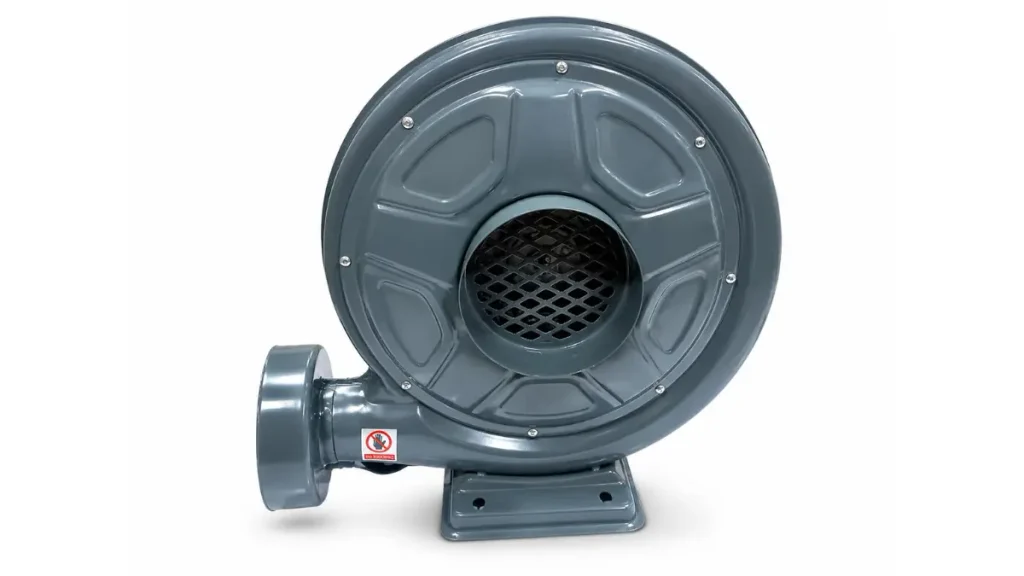
A centrifugal air blower uses a rotating impeller to draw air into the center and then push it outward at high speed. The blower housing converts this air velocity into useful pressure and directs the airflow through the outlet. Centrifugal blowers are a good choice when higher pressure and controlled airflow are required. Typical applications include:
An axial air blower moves air parallel to the blower’s rotating shaft using fan blades. It is designed to deliver high airflow at relatively low pressure, making it suitable for ventilation, cooling, air circulation, and industrial exhaust systems.
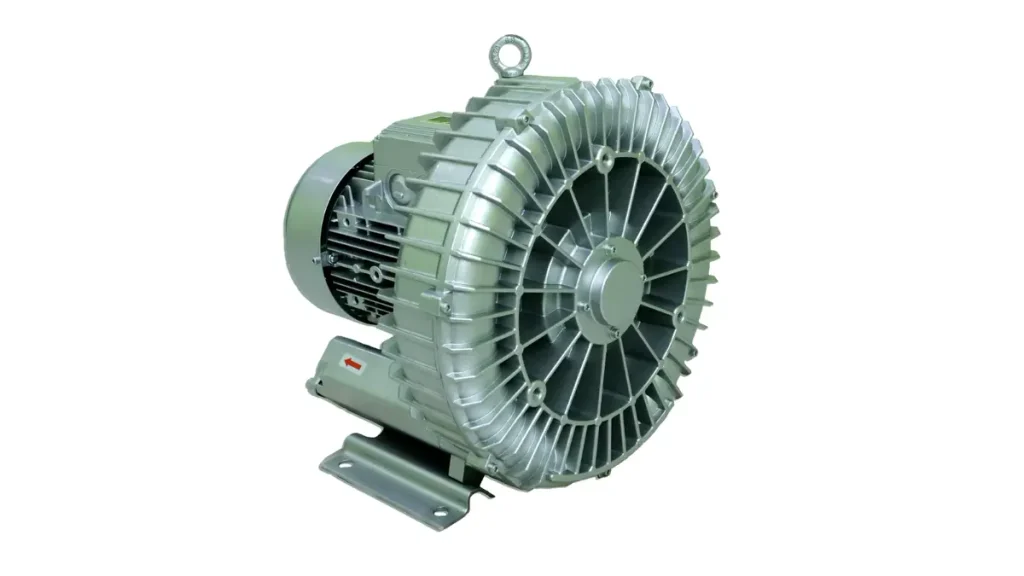
Regenerative blowers use a rotating impeller and repeated air movement within a specially designed channel. They can provide relatively high pressure or vacuum without using a conventional compressor. Applications include:
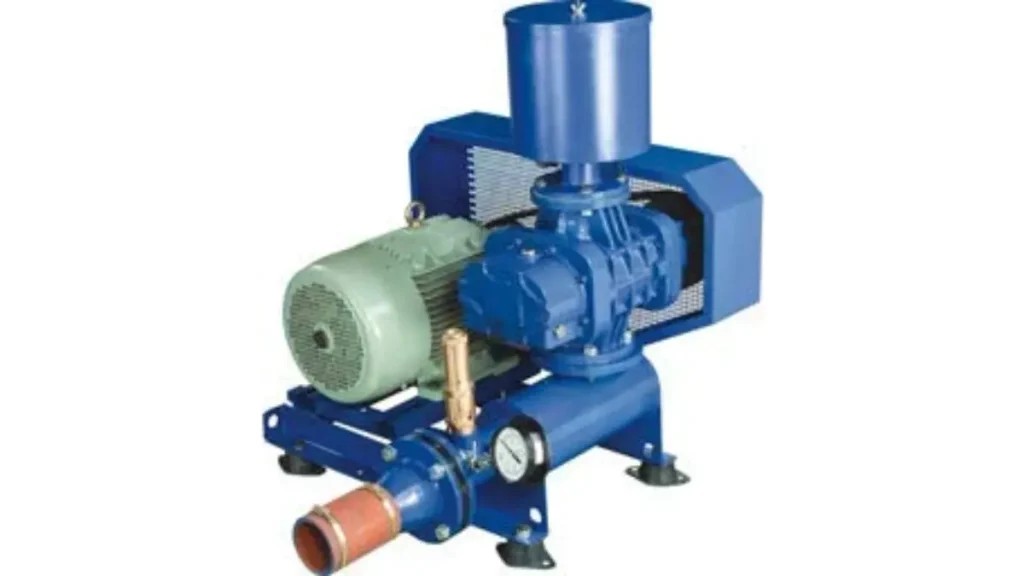
A Roots blower is a positive-displacement air blower that uses two rotating lobes to move air from the inlet to the outlet. It delivers a steady, high-volume airflow and can generate relatively high pressure for demanding applications. They are valued for their simple design, reliable operation, and continuous airflow. Examples include:
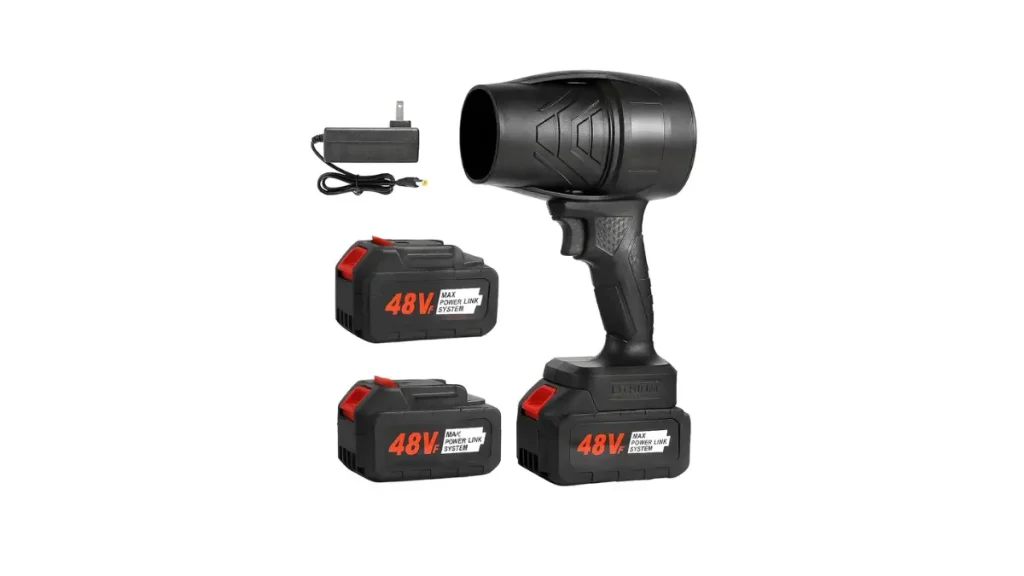
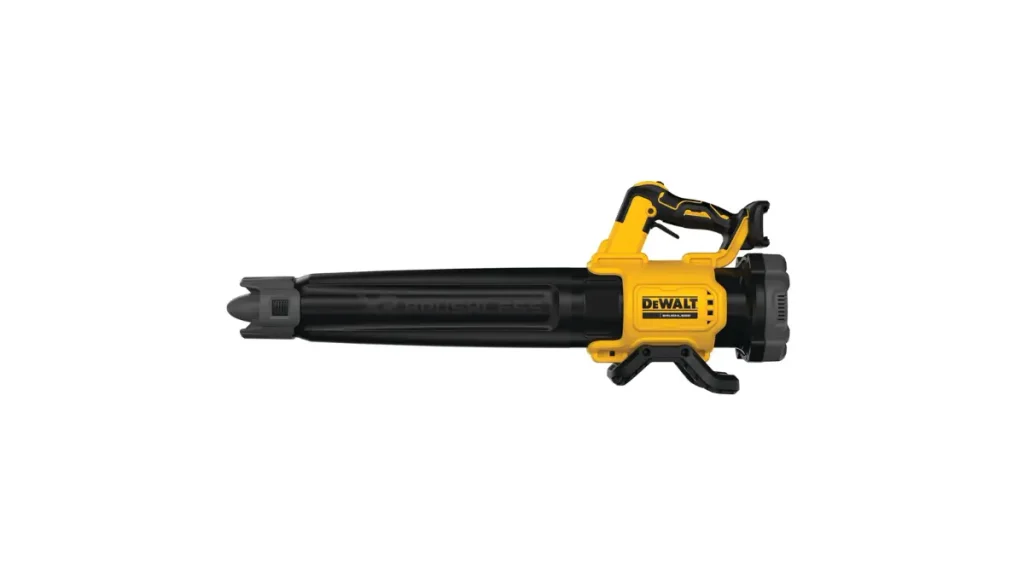
A portable air blower is a compact and lightweight blower designed for easy movement between different work areas. It produces a strong stream of air for cleaning, drying, dust removal, cooling, and maintenance tasks. They are available in electric and cordless models, making them convenient for both indoor and outdoor use. Portable blowers are commonly used in:
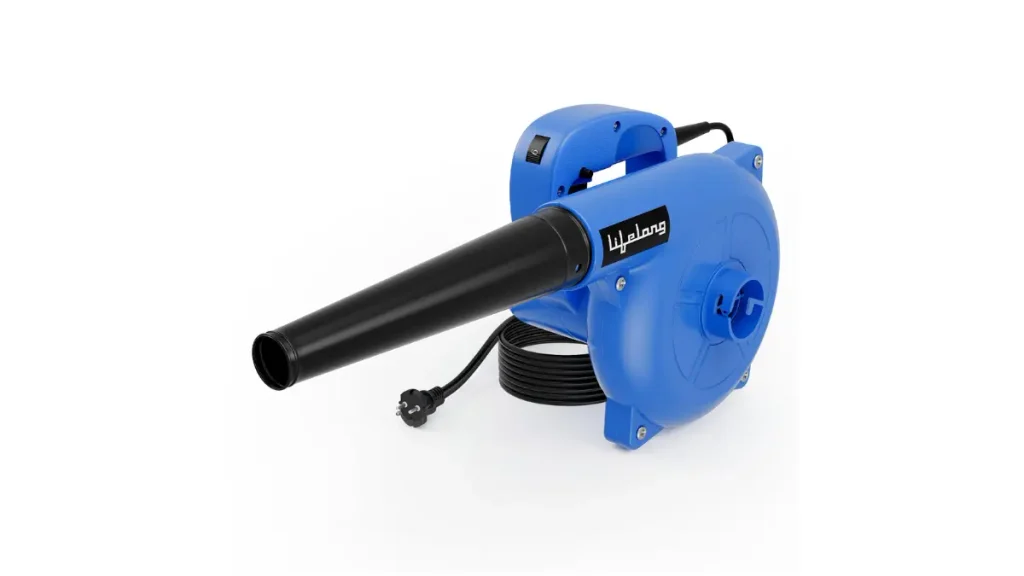
An electric air blower is powered by an electric motor that rotates a fan or impeller to generate a strong stream of air. It is commonly used for cleaning, dust removal, drying, cooling, and ventilation in workshops, factories, garages, and homes. Electric blowers provide consistent performance and are available in different airflow (CFM), pressure, and power ratings for various applications. Advantages include:
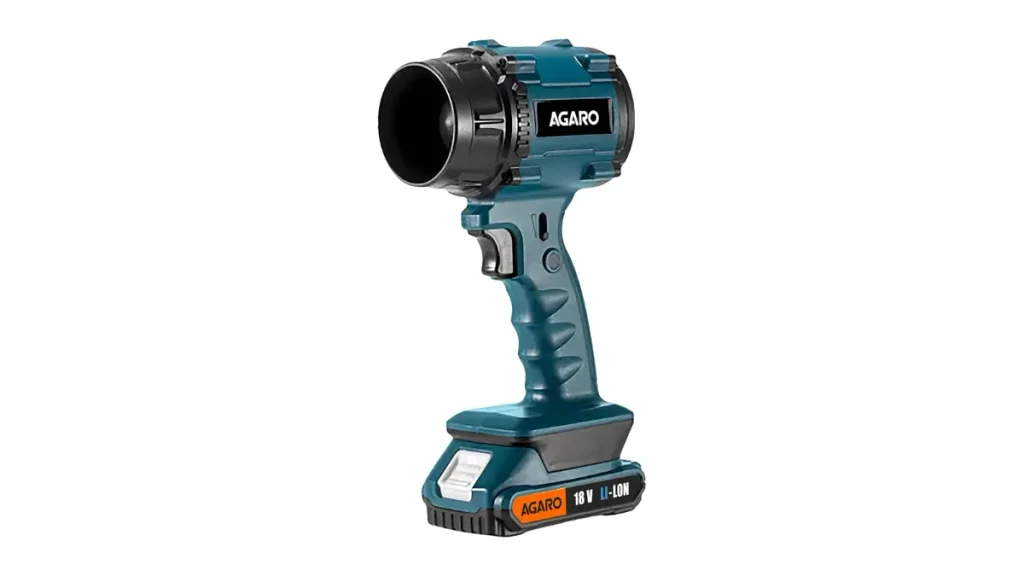
A cordless air blower is a battery-powered blower designed for portable and convenient air movement without a power cord. It uses a rechargeable battery to drive the motor and generate a strong airflow for cleaning, dust removal, drying, cooling, and maintenance. Cordless blowers are useful in workshops, garages, construction sites, gardens, and industrial maintenance, especially where electrical power is unavailable or mobility is important. They are especially useful when:
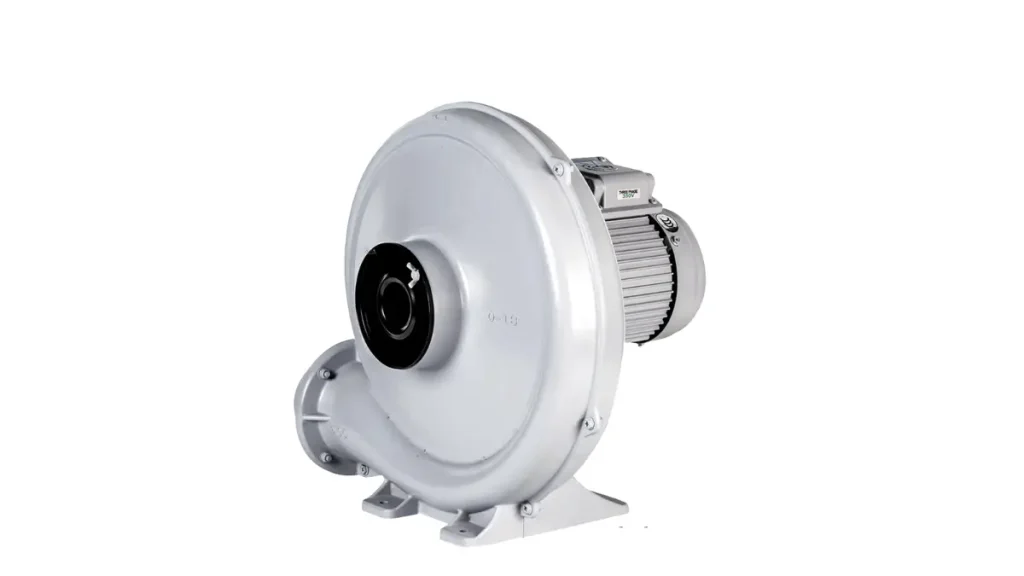
An industrial air blower is a heavy-duty machine designed to provide continuous airflow or high-pressure air for demanding industrial applications. Industrial blowers are available in centrifugal, axial, Roots, and side-channel designs, with different CFM, pressure, motor power, and efficiency ratings. They can be used in:
Although different Air Ejector designs work differently, the basic principle is straightforward.
Step 1: Air Intake : Air enters the blower through an intake opening. A filter may be used to reduce the amount of dust and debris entering the system.
Step 2: Impeller or Fan Rotation: The motor rotates the impeller or fan. This transfers mechanical energy to the air.
Step 3: Air Pressure Generation: The blower’s internal geometry converts the energy from rotation into air velocity and pressure.
Step 4: Air Discharge: The accelerated air exits through the outlet or nozzle.
Step 5: Airflow and Pressure Relationship: Two of the most important performance characteristics are:
A Compressed Air Duster with very high airflow is not automatically the best choice for every application. A system with restrictive ducts, filters or nozzles may require greater pressure capability.
Before purchasing an air blower, understand its specifications.
1. Airflow – CFM / m³/min:
2. Air Pressure:
Pressure indicates the blower’s ability to move air against resistance. For applications involving:
pressure capability can become particularly important.
3. Motor Power:
Motor power may be specified in:
More motor power does not automatically mean better performance. The blower’s overall design and efficiency also matter.
4. RPM:
5. Voltage:
Check whether the blower requires:
For US applications, voltage compatibility is especially important before purchasing.
6. Noise Level:
7. Nozzle Size:
8. Duty Cycle:
Air blowers are used across many industries and maintenance environments.
Industrial Cleaning
Workshop Cleaning
Portable blowers are useful for cleaning:
Machinery Cleaning
Dust Removal
Drying Applications
Electrical Panel Cleaning
Air blowers may be used for dust removal around electrical equipment, but electrical safety must come first.
Power should be isolated where required, and compressed/high-velocity air should not be used in a way that damages sensitive components or creates unsafe dust clouds.
HVAC Applications
Industrial blowers play an important role in:
Automotive Applications
Portable blowers can help remove water and loose debris from:
Construction
Construction workers may use blowers for general site cleanup, equipment cleaning and drying applications.
Manufacturing
Manufacturing facilities may use blowers for:
Choosing an air blower should begin with the application rather than the brand.
1. How to Choose an Air Blower
Ask these questions before buying:
2. Choose the Right CFM
For simple surface cleaning, a portable blower may be sufficient. For industrial systems, calculate the required airflow based on the application, ducting, pressure losses and manufacturer’s specifications. Do not select a blower using CFM alone.
3. Choose the Right Pressure
If the system contains filters, ducts or other restrictions, pressure capability becomes important. A high-flow blower may perform poorly if it cannot maintain sufficient airflow against system resistance.
4. Motor Power Selection
Choose motor power according to the required performance and operating conditions. Avoid simply buying the highest-power model. Excess capacity may increase:
5. Corded vs Cordless
| Feature | Corded | Cordless |
|---|---|---|
| Runtime | Long/continuous with power | Battery dependent |
| Mobility | Limited by cable | Excellent |
| Power consistency | Generally consistent | Depends on battery |
| Best for | Workshops/fixed areas | Mobile work |
| Charging | Not required | Required |
6. Portable vs Industrial
7. Runtime & Battery
For cordless blowers, check:
8. Noise Consideration
If the blower will be used for long periods, noise should be part of the purchasing decision.
9. Warranty & Build Quality
Look for:
For industrial use, after-sales support can be as important as initial price.
There is no single “best” air blower for every application.
| Application | Recommended Type |
|---|---|
| Workshop cleaning | Portable electric blower |
| Industrial cleaning | Industrial/high-performance blower |
| Electronics | Low-pressure controlled airflow where manufacturer-approved |
| Car cleaning | Portable or cordless blower |
| Dust removal | High-airflow blower or extraction system |
| Mobile maintenance | Cordless blower |
| Continuous process air | Industrial centrifugal/side-channel blower |
The best model is the one whose airflow, pressure, duty cycle and construction match the job.
1. Air Blower vs Air Compressor
A blower primarily moves a large volume of air, while a compressor is designed to compress air to substantially higher pressures. Use a blower for airflow-oriented jobs.Use an air compressor when compressed air is required for pneumatic tools or processes.
2. Air Blower vs Vacuum Cleaner
A blower pushes air outward. A vacuum cleaner pulls air and debris inward. For dust collection, a vacuum/extraction system may be preferable because it captures contaminants instead of redistributing them.
3. Centrifugal vs Axial Blower
| Feature | Centrifugal | Axial |
|---|---|---|
| Air direction | Changes direction through impeller | Mainly parallel to shaft |
| Pressure capability | Often higher | Generally lower |
| Air volume | Moderate/high | High |
| Typical use | Ducts, process systems | Ventilation/cooling |
4. Corded vs Cordless Blower
Corded models are suitable for continuous work near an electrical outlet. Cordless models are better when mobility and convenience are priorities.
5. Electric vs Battery Blower
Electric models can provide consistent operation without battery charging. Battery models provide greater freedom of movement but have limited runtime.
6. High CFM vs High Pressure Blower
Regular air blower maintenance helps maintain proper airflow, reduce energy consumption, and extend equipment life. Clean the air filter, inlet, and outlet regularly to prevent dust buildup and airflow restrictions. Check the motor, bearings, belts, shaft, and impeller for wear, unusual noise, or vibration, and lubricate components according to the manufacturer’s instructions. Also inspect electrical connections and tighten loose parts. Routine maintenance can help prevent overheating, unexpected breakdowns, and costly repairs.
Regular maintenance helps maintain airflow and reduce unexpected failures.
1. Clean the Air Filter: A blocked filter can restrict intake airflow and increase motor load. Inspect and clean or replace filters according to the manufacturer’s instructions.
2. Clean the Nozzle: Remove accumulated dust and debris from the outlet and nozzle.
3. Motor Maintenance: Check for:
Follow the manufacturer’s maintenance schedule.
4. Check Bearings: If the blower uses serviceable bearings, inspect them for:
5. Prevent Overheating: Avoid blocking ventilation openings and do not exceed the rated duty cycle.
6. Storage Tips: Store the blower:
Common air blower problems include low airflow, excessive noise, overheating, vibration, motor failure, and reduced pressure. These issues can be caused by a clogged air filter, blocked inlet or outlet, worn bearings, loose components, damaged impellers, or motor problems. Regular cleaning, lubrication, inspection, and proper maintenance can help prevent breakdowns and maintain efficient blower performance.
A. Low Airflow: Possible causes include:
B. Blower Overheating: Possible causes include:
C. Excessive Noise: Possible causes include:
D. Vibration: Unusual vibration can indicate:
Stop operation if vibration suddenly becomes severe.
E. Motor Not Starting: Check:
Electrical repairs should be performed by qualified personnel when appropriate.
F. Battery Draining Quickly: For cordless models, possible causes include:
G. Burning Smell: A burning smell should not be ignored. Turn off the blower and disconnect the power source. Continued operation could cause further damage or create a safety hazard.
Safety is particularly important when using high-speed airflow.
Air blower prices vary significantly depending on design, power, airflow, pressure, construction and intended application.
Air blower product reviews help buyers compare different models based on airflow (CFM), air pressure, motor power, speed, noise, battery life, build quality, and overall value. A good review should explain the blower’s performance, suitable applications, key features, advantages, limitations, and maintenance needs. For industrial buyers, also consider duty cycle, durability, energy efficiency, warranty, and replacement-parts availability before choosing a model.
| Attribute | Details |
|---|---|
| Brand | Product manufacturer |
| Type | Cordless/Corded/Industrial etc. |
| Motor Power | Manufacturer specification |
| Airflow | CFM or m³/min |
| Pressure | Manufacturer specification |
| Voltage | Rated voltage |
| Battery | If applicable |
| Weight | Product weight |
| Warranty | Manufacturer warranty |
| Category | Rating |
|---|---|
| Airflow | 4.5/5 |
| Build Quality | 4.5/5 |
| Ease of Use | 4/5 |
| Portability | 4.5/5 |
| Value | 4/5 |
Use the following as a basic selection framework. Exact CFM and pressure requirements should always be confirmed against the application and manufacturer’s specifications.
| Application | Airflow Need | Pressure Need | Suggested Type |
|---|---|---|---|
| Light cleaning | Low–Medium | Low | Portable blower |
| Workshop cleaning | Medium–High | Medium | Electric/cordless |
| Machinery cleaning | Medium–High | Medium | Professional blower |
| Large-area ventilation | High | Low–Medium | Axial blower |
| Dust collection | Application-dependent | Medium–High | Centrifugal blower |
| Process air | Application-dependent | Application-dependent | Industrial blower |
| Mobile maintenance | Medium | Medium | Cordless blower |
- Simple Selection Formula: Think of blower selection as:
- Required Performance = Airflow + Pressure + Duty Cycle + Application Conditions
- Do not select equipment based on motor wattage alone.
An air blower is a versatile tool and industrial machine used for cleaning, drying, cooling, ventilation and many process applications. From a compact cordless blower for mobile maintenance to a large centrifugal blower for industrial systems, the correct choice depends on the job.
Before buying, focus on the specifications that actually matter: CFM, pressure, motor power, RPM, voltage, noise, duty cycle, portability and build quality. For industrial applications, also consider reliability, maintenance requirements and manufacturer support.
The most important rule is simple: choose the air blower according to the application—not simply according to the highest power or lowest price.
An air blower is used to move and direct air for applications such as cleaning, drying, cooling, ventilation, dust management and industrial processes.
The best air blower depends on the application. Consider airflow, pressure, duty cycle, power source, portability and operating environment before selecting a model.
There is no universal ideal CFM. Light cleaning may require much less airflow than industrial ventilation or process applications. Select CFM according to the actual application.
Neither is universally better. A blower is generally selected for moving large volumes of air, while an air compressor is selected when compressed air at higher pressure is required.
Yes, an air blower can move loose dust from surfaces. However, it can also redistribute fine dust, so dust extraction or vacuum collection may be safer for hazardous or airborne particles.
It depends on the equipment and manufacturer’s recommendations. Sensitive electronics may require controlled, low-pressure cleaning methods. Avoid damaging components or generating electrostatic discharge.
Runtime depends on the model, motor, duty cycle, cooling system and application. Cordless models are also limited by battery capacity.
Keep filters and air passages clean, inspect the nozzle, check for abnormal noise or vibration, prevent overheating and follow the manufacturer’s maintenance schedule.
A 1 HP blower can typically produce approximately 200–500 CFM, depending on its design, pressure, and operating conditions.
EGO, Toro, Makita, DEWALT, and Milwaukee are popular brands. The best choice depends on power, CFM, battery life, and intended use.
For home use, 300–500 CFM is generally good. Heavy-duty industrial or commercial blowers may require 600 CFM or more.
Choose a blower based on your application. For cleaning, a high-speed blower is useful; for moving leaves or debris, prioritize higher CFM.
CFM measures the volume of air moved, while MPH measures air speed. CFM is generally more important for moving large amounts of leaves and debris.
The most powerful blower depends on the category. High-performance commercial cordless and gas-powered blowers can deliver over 1,000 CFM.
Not always. Higher CFM is better for moving large debris, but MPH and overall design also affect cleaning performance.
Both offer powerful models. EGO is often recognized for high-performance cordless blowers, while Toro also offers strong battery and gas-powered options.
800 CFM means the blower can move approximately 800 cubic feet of air per minute.

Welcome! I am a dedicated entrepreneur running an industrial affiliate product website, helping businesses and professionals find the best tools, equipment, and resources for their needs. With a passion for industrial products and a keen eye for quality, I curate and recommend top-performing items that enhance efficiency and reliability.
Through my platform, I aim to simplify the buying process by providing valuable insights, expert reviews, and trusted affiliate links to high-quality industrial products. Whether you’re looking for the latest machinery, tools, or safety gear, I strive to connect you with the best solutions available.
Thank you for visiting, and I look forward to helping you make informed purchasing decisions!
