Our Location
Killa-Pardi, Dist. Valsad, 396125

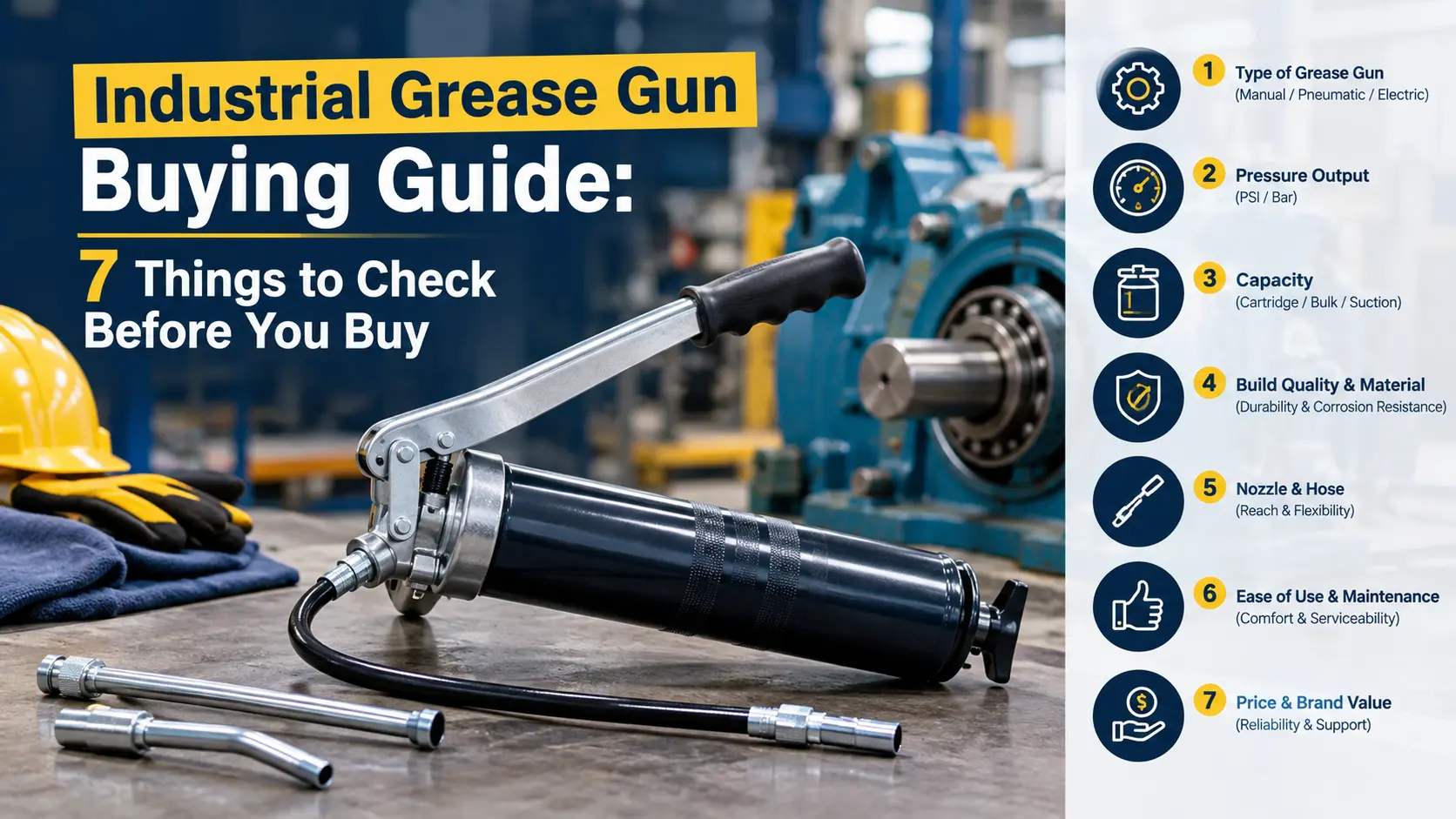
Choosing the right industrial grease gun can make bearing lubrication faster, cleaner and more consistent. But with manual, pistol-grip, pneumatic and battery-powered grease guns available, selecting the right tool is not always straightforward.
A grease gun is more than a simple grease applicator. It is a pressure-delivery tool designed to force lubricant through a grease fitting and into bearings, bushings, pins and other moving components. For occasional maintenance, a manual grease gun may be all you need. For a busy maintenance shop, fleet operation or industrial plant, a pneumatic or cordless battery grease gun can save significant time and reduce operator fatigue.
This industrial grease gun buying guide explains the seven most important factors to consider before buying, including pressure, power source, grease compatibility, cartridge capacity, hose length, coupler design and application.
For occasional workshop maintenance, a manual lever grease gun is usually the simplest and most economical choice. For frequent industrial lubrication, a pneumatic grease gun can be a better option when compressed air is readily available.
For mobile maintenance, construction equipment, agricultural machinery and fleet service, a battery-powered grease gun offers an excellent combination of portability, speed and reduced operator fatigue. The right choice depends on four basic questions:
Current industrial guides generally divide grease guns into manual, pistol-grip, pneumatic and battery-powered categories, with each type optimized for different maintenance environments.
An industrial grease gun is a mechanical or powered lubrication tool that delivers grease under pressure through a grease fitting, commonly called a Zerk fitting.
The grease travels from the gun’s reservoir or cartridge through a hose and coupler into the fitting. From there, it reaches the bearing, bushing, pin or other lubricated component. Industrial grease guns are commonly used in:
The purpose is simple: deliver the correct lubricant in the correct amount at the correct interval.
However, selecting a high-pressure grease gun does not automatically mean better lubrication. Excessive pressure or grease volume can damage seals or cause over-lubrication. The equipment manufacturer’s lubrication instructions should always take priority.
Choosing the right industrial grease gun can make lubrication faster, easier, and more efficient while helping extend machine and bearing life. Before buying, check important factors such as maximum pressure, grease delivery rate, battery or power source, hose length, grease cartridge compatibility, build quality, and ease of use. Selecting a grease gun based on your machine’s lubrication requirements can improve maintenance performance and reduce downtime.
PSI, or pounds per square inch, is one of the most important specifications when choosing a grease gun.
Different grease guns can have significantly different pressure ratings. SKF, for example, lists some manual grease guns at a maximum pressure of 400 bar (5,800 psi). Other industrial grease guns may have higher maximum ratings depending on their design.
But there is an important point:
Higher PSI does not always mean better.
A high-pressure grease gun can be useful when grease must pass through a restrictive fitting or difficult lubrication point. However, forcing excessive pressure into a sealed bearing can damage the seal. Therefore, never select a grease gun based on PSI alone.
Consider:
A grease gun should provide enough pressure for the application without encouraging unsafe over-greasing.
There are four major types of grease guns you should consider.
A manual lever grease gun uses hand force to build pressure.
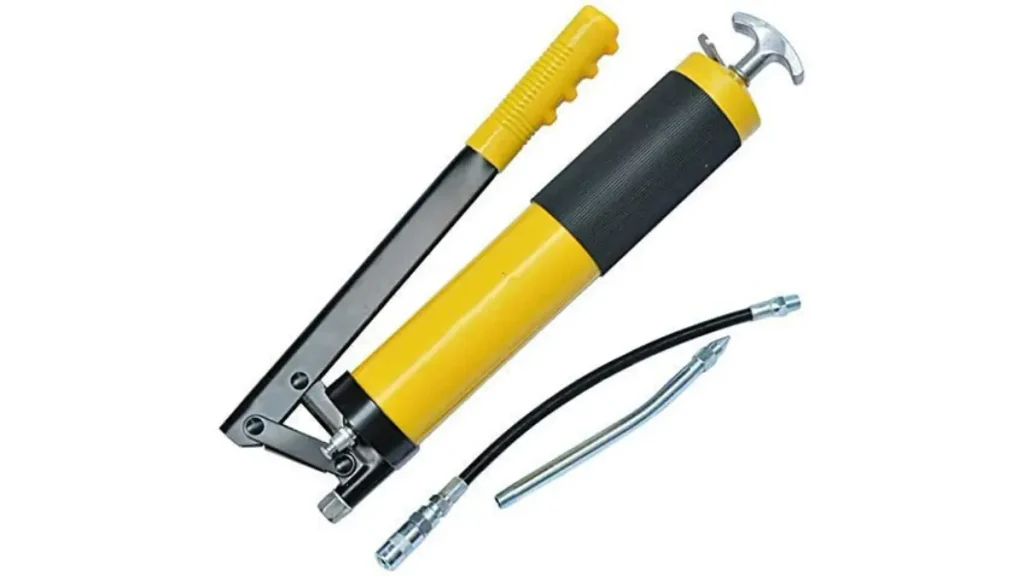
Manual grease guns are ideal for:
A pistol-grip grease gun is designed for easier one-handed operation. It can be particularly useful when the lubrication point is difficult to reach or when the operator needs to hold a hose or coupler with the other hand.
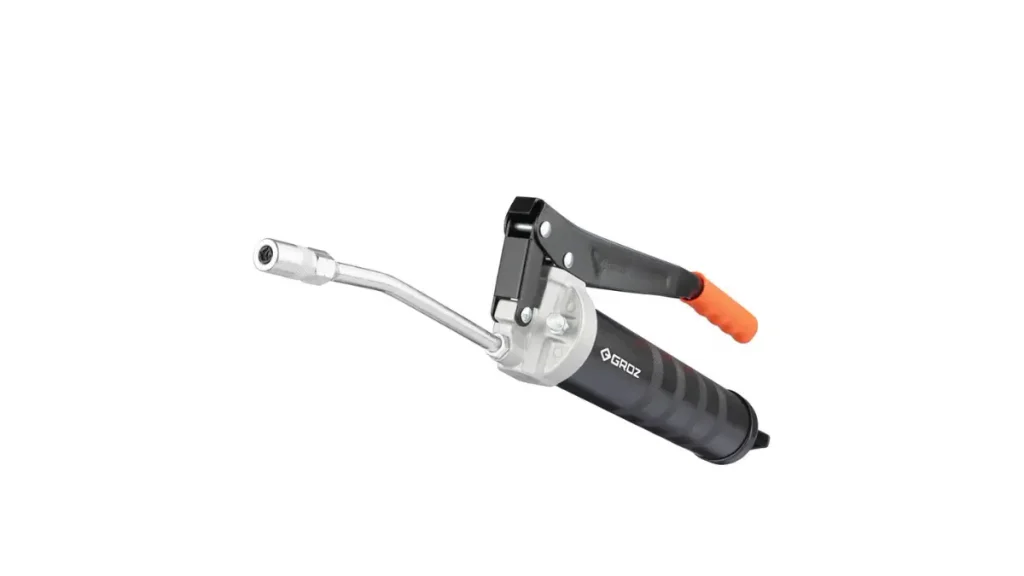
The main benefit is ergonomics rather than simply maximum pressure.
A pneumatic grease gun uses compressed air instead of manual pumping. It is especially useful in workshops and industrial facilities where compressed air is already available.
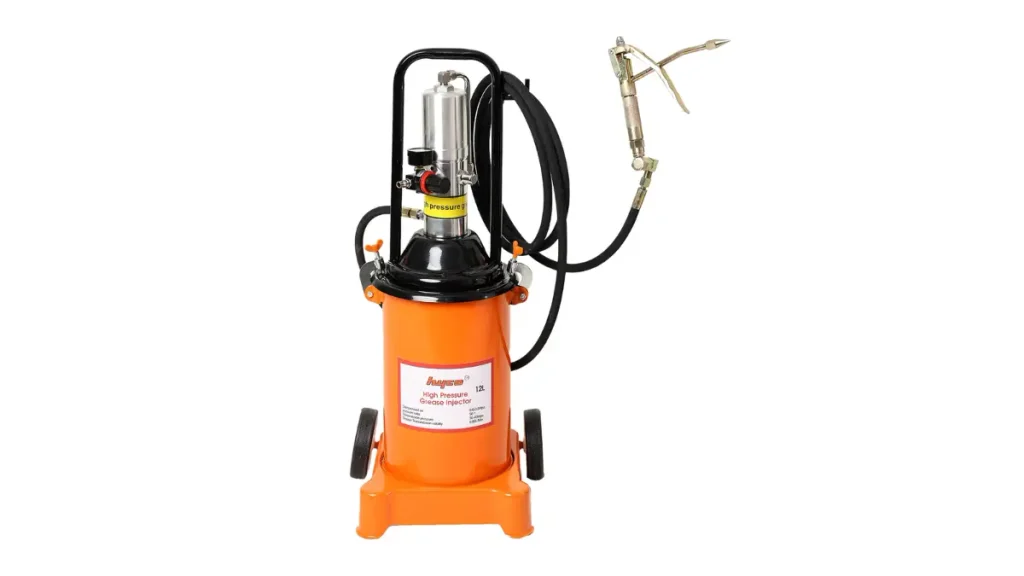
Pneumatic grease guns are particularly suitable for:
Industrial references commonly identify pneumatic grease guns as a strong choice for high-frequency workshop and fleet maintenance because they can deliver grease continuously with less manual effort.
A battery-powered grease gun uses an electric motor and rechargeable battery to pump grease. This type has become increasingly popular for professional maintenance because it combines portability with fast grease delivery.
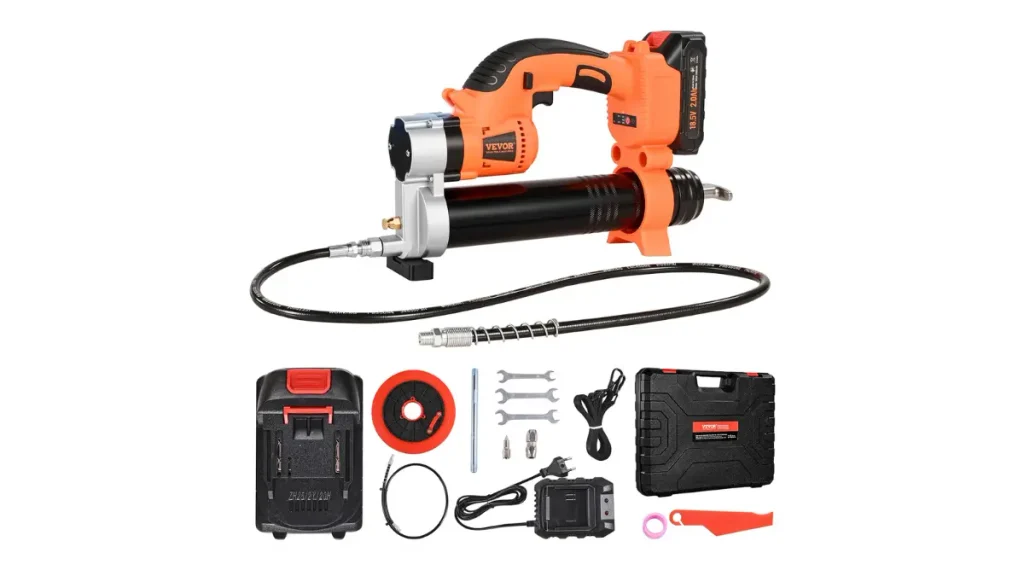
Battery grease guns are especially attractive for technicians who service multiple machines at different locations.
| Type | Power Source | Best For | Portability | Operator Effort |
|---|---|---|---|---|
| Manual Lever | Hand | Occasional maintenance | Excellent | High |
| Pistol Grip | Hand | Workshops & tight spaces | Excellent | Medium |
| Pneumatic | Compressed air | High-volume shop work | Moderate | Low |
| Battery | Rechargeable battery | Field & professional work | Excellent | Low |
There is no universally “best” industrial grease gun. The best option depends on your workload, location, lubrication points and available power source.
Before buying a grease gun, check which cartridge or loading system it accepts.
In the United States, 14 oz (approximately 397 g) cartridges are commonly used for grease guns, although cartridge and bulk-loading configurations vary by manufacturer and market. Current grease-gun guides also distinguish US 14-oz cartridges from other regional formats. Common loading methods include:
The grease cartridge is inserted directly into the barrel.
Advantages:
Grease is manually loaded into the gun reservoir.
Advantages:
The follower mechanism helps push grease toward the pump. A reliable follower system can reduce air pockets and improve priming.
The coupler is the connection between the grease gun and the grease fitting. A poor-quality coupler can cause:
For industrial applications, look for a coupler that securely locks onto the fitting and is rated appropriately for the system. Common options include:
A current year coupler guide identifies locking 4-jaw couplers as a common choice for general industrial lubrication and notes that specialized couplers can help with worn or difficult-to-access fittings.
If your technicians frequently struggle to connect or disconnect the grease gun, upgrading the coupler may improve productivity more than simply buying a higher-PSI gun.
A grease fitting may not always be located in an easily accessible position. A flexible grease hose can help reach:
A rigid extension may be better when precise positioning is required. For general industrial maintenance, consider a hose long enough to reach difficult fittings without forcing the operator into an unsafe position.
A combination of both can provide greater flexibility.
This is one of the most overlooked buying factors.
Ask: How many grease points do you service every day?
If you lubricate five or ten fittings per week, a manual grease gun may be perfectly adequate. If you lubricate hundreds of fittings every week, manual pumping can become inefficient.
| Type of maintenance | Choose : |
| Low-volume maintenance | Manual lever or pistol-grip grease gun |
| Medium-volume maintenance | Pistol-grip or battery-powered grease gun |
| High-volume maintenance | Pneumatic or battery-powered grease gun |
| Mobile heavy-equipment maintenance | Battery-powered grease gun |
The objective is not to buy the most expensive tool. The objective is to match the grease gun to the workload.
Industrial maintenance can involve hours of repetitive lubrication. A grease gun that is technically powerful but uncomfortable can reduce productivity.
Look for:
For battery-powered models, also check:
If your technicians already use a particular cordless-tool ecosystem, choosing a compatible grease gun can simplify battery management.
| Grease Gun Type | Best For | When Should You Choose It? |
|---|---|---|
| Manual Grease Gun | Low-frequency lubrication | Budget is important You do not have compressed air Lubrication frequency is low Maximum portability is required You need a reliable backup tool |
| Pneumatic Grease Gun | High-volume workshop lubrication | A compressor is already available Many grease points must be serviced Speed is important Operators perform repetitive lubrication The equipment is primarily serviced indoors |
| Battery Grease Gun | Mobile professional maintenance | You work in the field Machines are spread across a large facility Compressed air is unavailable You service heavy equipment You want to reduce manual pumping Productivity matters |
| Feature | Manual | Pneumatic | Battery |
|---|---|---|---|
| Power Source | Hand-operated | Air compressor | Rechargeable battery |
| Portability | ⭐⭐⭐⭐⭐ | ⭐⭐ | ⭐⭐⭐⭐ |
| Speed | ⭐⭐ | ⭐⭐⭐⭐⭐ | ⭐⭐⭐⭐ |
| Best Environment | Small/occasional jobs | Workshops & factories | Field & mobile maintenance |
| Initial Cost | Low | Medium | Medium–High |
| Operator Effort | High | Low | Low |
| Best For | Occasional lubrication | High-volume lubrication | Professional mobile maintenance |
There is no single PSI number that works for every application. The required pressure depends on:
Some industrial grease guns are rated around 5,800 PSI, while other models can have substantially higher maximum pressure.
Do not assume that maximum PSI is the recommended operating pressure for your bearing. A grease gun capable of producing very high pressure can potentially damage seals or components if used incorrectly.
Always follow the machinery or bearing manufacturer’s lubrication procedure.
Yes. Over-greasing is a common lubrication mistake. Too much grease can increase:
In some applications, excessive pressure can also damage seals. The correct grease quantity and lubrication interval depend on the bearing, speed, load, temperature, grease type and application. Therefore:
Do not pump grease into a bearing simply until the grease gun becomes difficult to operate. Follow the manufacturer’s lubrication instructions whenever available.
If your main application is bearing lubrication, use this checklist:
Step 1: Identify the bearing
Determine:
Step 2: Identify the grease
Check:
Step 3: Determine lubrication frequency
Is the bearing lubricated:
Step 4: Determine accessibility
Is the grease fitting:
Step 5: Select the gun type
Use the workload and environment to select: Manual → Pneumatic → Battery
Step 6: Select the correct coupler
Choose a coupler that fits the grease fitting and is appropriate for your operating conditions.
Step 7: Verify the manufacturer’s lubrication instructions
This is the most important step.
Mistake 1: Buying Only for Maximum PSI
Mistake 2: Ignoring Grease Compatibility
Mistake 3: Buying the Wrong Cartridge Size
Mistake 4: Choosing a Short Hose
Mistake 5: Buying a Battery Gun Without Checking the Battery System
A grease gun itself requires maintenance.
There is no single best grease gun for every technician.
| Best for occasional maintenance | Manual lever grease gun | Affordable, simple and portable. |
| Best for tight spaces | Pistol-grip grease gun | Easy to operate when one-handed access is important. |
| Best for high-volume workshops | Pneumatic grease gun | Excellent when compressed air is available. |
| Best for mobile maintenance | Battery-powered grease gun | Ideal for field technicians and heavy equipment. |
Best overall for professional mobile maintenance
For many professional maintenance operations, a cordless battery grease gun offers a strong balance of portability, productivity and reduced operator fatigue.
However, the correct choice should always be based on the manufacturer’s requirements and actual workload.
Before purchasing, check these specifications:
Choosing the right industrial grease gun is ultimately about matching the tool to the job.
For occasional maintenance, a manual lever grease gun provides simplicity and low cost. For high-volume shop environments, a pneumatic grease gun can provide fast and consistent lubrication with less operator fatigue. For mobile technicians and heavy-equipment maintenance, a battery-powered grease gun offers an excellent combination of portability and productivity.
But don’t make your decision based on PSI alone.
Before buying, evaluate pressure, grease compatibility, cartridge size, coupler, hose length, workload, ergonomics and power source. Most importantly, follow the lubrication instructions supplied by the bearing or equipment manufacturer.
The right grease gun is not necessarily the most powerful or most expensive model. It is the one that delivers the correct lubricant efficiently, safely and consistently for your specific maintenance application.
The best grease gun depends on workload. Manual guns are suitable for occasional work, pneumatic guns are excellent for high-volume workshop maintenance, and battery-powered grease guns are ideal for mobile professional applications.
There is no universal PSI requirement. Select a grease gun based on the equipment manufacturer’s lubrication requirements. Some industrial manual grease guns are rated around 5,800 PSI, while other models provide substantially higher maximum pressure.
For frequent lubrication, a battery grease gun can significantly reduce manual effort and improve productivity. For occasional lubrication, a manual grease gun is usually more economical.
A pneumatic grease gun is excellent for stationary workshops with compressed air. A battery grease gun is usually more convenient for mobile or outdoor maintenance.
Yes, improper lubrication can damage bearings. Excessive grease, incorrect lubricant, excessive pressure or incorrect lubrication intervals can contribute to premature failure.
Check the grease gun manufacturer’s specification. In the U.S., 14-oz cartridges are a common format, but cartridge compatibility varies by gun.
Do not assume that different grease types are compatible. Check the grease manufacturer’s compatibility information and follow the equipment manufacturer’s recommendations before changing lubricant.
There is no universal interval. Lubrication frequency depends on bearing size, speed, load, temperature, environment, grease type and equipment design.
No. Maximum pressure is only one specification. Excessive pressure can damage seals or fittings, so the grease gun should be selected according to the application.
For most buyers, the most important features are appropriate pressure capability, reliable grease delivery, correct cartridge compatibility, a suitable coupler and ergonomics. The best combination depends on the application.

Welcome! I am a dedicated entrepreneur running an industrial affiliate product website, helping businesses and professionals find the best tools, equipment, and resources for their needs. With a passion for industrial products and a keen eye for quality, I curate and recommend top-performing items that enhance efficiency and reliability.
Through my platform, I aim to simplify the buying process by providing valuable insights, expert reviews, and trusted affiliate links to high-quality industrial products. Whether you’re looking for the latest machinery, tools, or safety gear, I strive to connect you with the best solutions available.
Thank you for visiting, and I look forward to helping you make informed purchasing decisions!
